
The Ergonomic Gamble: Apple’s Touchscreen MacBook Pro and the $2,900 Question

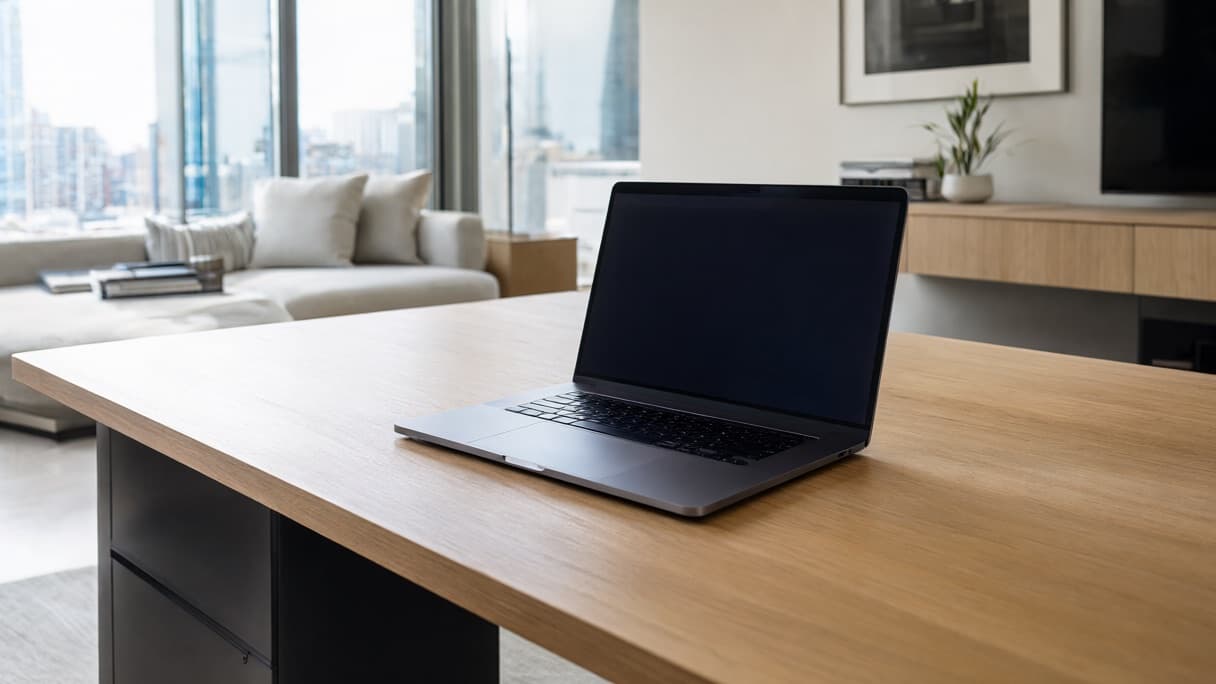
AI-generated image · US National Wire
After years of resistance, Apple has finally embraced the touch interface. But as the company pushes price points to new extremes, the question remains: is this a genuine leap in usability or a luxury play for a stagnant market?
For over a decade, Apple maintained a strict ideological wall between its touch-driven mobile devices and the traditional input of the Mac. Steve Jobs famously dismissed the concept of touchscreen laptops as “ergonomically terrible,” a sentiment that echoed through the company's design philosophy for years.
That wall has finally crumbled. At the company's “Pro and tell” event, Apple introduced the MacBook Pro with PROLED XDR, the first laptop in the lineup to feature a full touch interface. While the move marks a seismic shift in strategy, it arrives with a price tag that suggests Apple is targeting a very specific, very wealthy echelon of power users.
### The Cost of Innovation
There is no avoiding the sticker shock. According to reporting from *The Verge*, the touchscreen OLED model starts at $2,899—a $400 premium over the similarly-specced M5 Pro MacBook Pro. *Engadget* notes that this represents the highest launch price ever seen for a MacBook Pro. For those who want the absolute ceiling of performance, the costs become astronomical; *Engadget* reports that a fully-decked-out 16-inch model featuring an M5 Max chip, 16TB of storage, and 128GB of RAM reaches an "eye-watering" $14,549.
This aggressive pricing puts the new device in a precarious position. While *The Verge* highlights that Apple has put effort into making macOS more touch-friendly, the fundamental ergonomic challenge remains: the physical act of lifting one's arm to interact with a vertical screen.
### Ergonomic Refinements or Cosmetic Wins?
Apple is attempting to mitigate the "terrible" ergonomics through a combination of weight reduction and hardware stabilization. *TechCrunch* reports that Apple designed a specific hinge to stabilize the screen during touch interactions, which also serves to steady the camera during video calls.
Weight has also been a primary focus. *The Verge* and *Engadget* both report that the 14-inch model now weighs just 3 pounds, down from 3.4 pounds in the current non-touch generation. The 16-inch model sees an even more dramatic drop, weighing 4 pounds compared to the 4.7 to 4.8 pounds of its non-touch predecessors.
Beyond the weight, Apple has leaned into nostalgia and aesthetics. *The Verge* and *Engadget* both note the return of the glowing Apple logo on the lid, a feature that dims in sync with the screen. Additionally, *TechCrunch* reports the replacement of the traditional notch with a Dynamic Island-style cutout around the webcam.
### The Software Struggle
Integrating touch into macOS is a fraught endeavor. *The Verge* reports that while first-party apps support gestures like pinching to zoom, swiping to scroll, and double-tapping to maximize windows, the experience can be "fiddly" or "infuriating" when trying to hit small buttons. Apple's solution is a magnification system that enlarges controls—such as the window's "traffic light" buttons—when a user pokes at them.
As a fallback, macOS translates taps into clicks, ensuring third-party apps remain functional. *Engadget* reports that certain creator apps, including Blender, Canva, Notion, and Powerpoint, will work with the touchscreen natively. The device also allows users to interact with iOS apps as they would on a phone, a feature *Engadget* suggests would be particularly valuable for developers.
### A Divided Lineup
Interestingly, the touchscreen launch coincides with a separate, more traditional update. *The Register* reports that Apple is also releasing a standard 14-inch MacBook Pro powered by the new M6 chip. This model, which starts at $1,999, is described as a "mid-cycle refresh" that remains largely unchanged in design but offers significant under-the-hood gains.
According to *The Register*, the M6 chip—fabricated on TSMC’s 2nm process—features 12 CPU and 12 GPU cores, along with a dual 16-core Neural Engine. Apple claims this results in 30 percent higher performance in Xcode compared to the M5, as well as 1.2x faster performance in the Affinity creative suite and 1.3x faster rendering and prompt processing in Blender.
### Opinion: The Luxury Pivot
**Opinion:** It is difficult to view the PROLED XDR as a product for the average consumer. By pricing the entry-level touch model nearly $1,000 higher than the base M6 MacBook Pro, Apple is signaling that touch is not a standard utility, but a luxury tier.
While the weight reductions are impressive, they don't fundamentally solve the ergonomic fatigue of reaching for a screen. Instead, this feels like a strategic pivot toward the "local AI hardware" market mentioned by *Engadget*. By pairing a high-end OLED touch interface with the M5 Max's 128GB of memory, Apple isn't just selling a laptop; they are selling a high-margin status symbol for the AI era. The touchscreen is the centerpiece, but the $2,899 starting price is the real story.
### Technical Specifications
For those weighing the investment, *TechCrunch* and *Engadget* provide the following hardware details for the touchscreen models:
* **Display:** PROLED XDR with 2,000 nits peak HDR/SDR brightness and a 10,000,000:1 contrast ratio. * **Refresh Rate:** 120Hz. * **Screen Sizes:** 14.2-inch and 16.3-inch. * **Processing:** M5 Pro or M5 Max chips. * **Connectivity:** Three Thunderbolt 5 ports, HDMI, SDXC card slot, MagSafe, and a headphone jack. * **Audio:** Six-speaker array with a redesigned woofer. * **External Displays:** Up to three displays for M5 Pro; up to four for M5 Max.
Pre-orders for the new touchscreen MacBook Pro begin October 30, with general availability starting November 6, according to *TechCrunch*.