
Beyond the Hard-Coded: How World Models are Redefining Virtual Physics

AI-generated image · US National Wire
From autonomous cars to gaming giants like Tencent, the shift toward generative 3D environments signals a move away from scripted physics toward learned reality.
For decades, game engines have relied on hard-coded physics—sets of rules written by developers to dictate how an object falls or bounces. But a fundamental shift is underway. As reported by Wired, the industry is moving toward "world models," AI systems that don't just predict the next word in a sentence like large language models, but predict the next visual state of a 3D environment.
This isn't just a technical milestone for robotics; it is a blueprint for the next generation of immersive interactive media. By using visual inputs to generate digital environments that simulate physics, these models allow for the reconstruction of the real world. Brian McClendon, the chief technology officer of Niantic Spatial, notes that the goal is to leverage vast troves of world data to build replicas, allowing software to run millions of simulations to train agents on specific spatial parameters.
While the immediate applications are focused on the physical world—such as home robotics and driverless cars—the implications for gaming are profound. Wired reports that because 3D rendering and physics are the bedrock of video games, major industry players like Tencent are already investing in their own world models. Instead of developers manually coding every interaction, these systems learn cause and effect through observation.
This shift toward learned physics is already attracting massive capital. According to Wired, AMD recently acquired World Labs—a startup launched in 2024 by Stanford computer scientist Fei-Fei Li—for more than $8 billion. Additionally, Yann LeCun, the former chief AI scientist at Meta, has raised over $1 billion to fund his startup, Advanced Machines Intelligence.
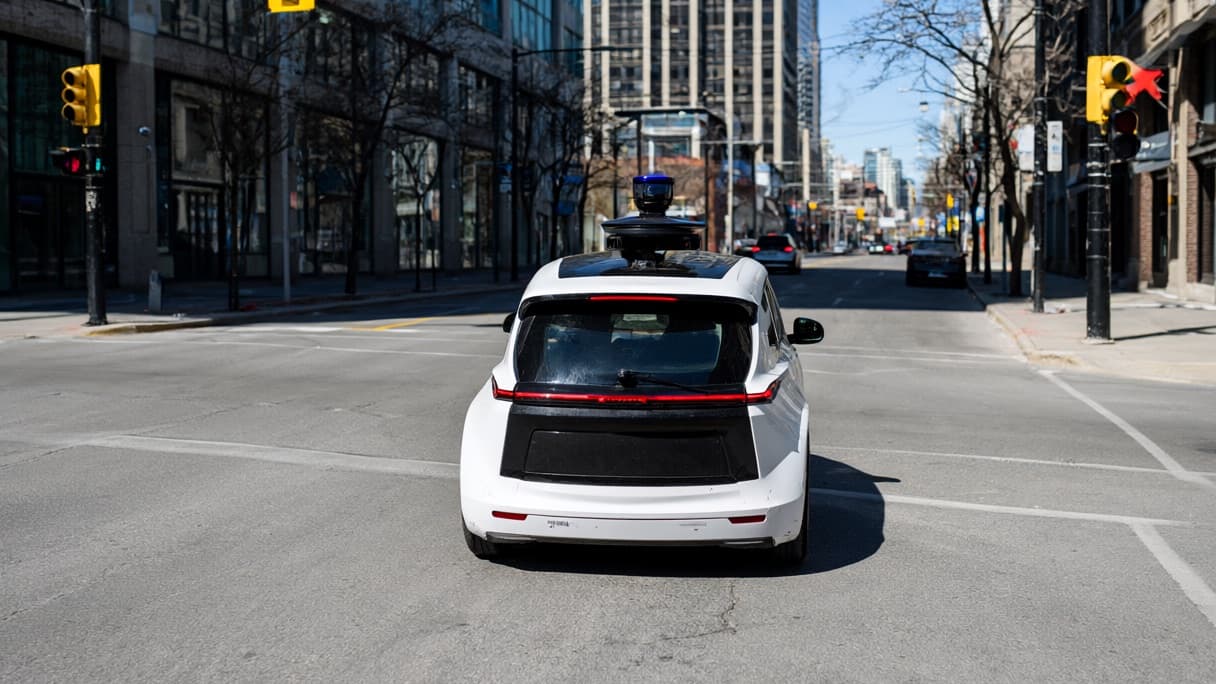
The utility of these models lies in their ability to simulate hazardous or complex scenarios that are impractical to test in reality. Jamie Shotton, chief scientist at Wayve, explains that world models must understand physics and how objects or people react to specific actions. Wayve, for instance, uses dashcam footage to power generative models that recreate unsafe road conditions.
As Oliver Cameron, CEO of the AI lab Odyssey, puts it, these 3D generations serve as digital training grounds that "look and feel real." For the gaming industry, this suggests a future where environments aren't just rendered, but are simulated entities capable of reacting with a level of physical authenticity that hard-coded engines simply cannot match.