
The Terrifying Speed of the Anthropocene

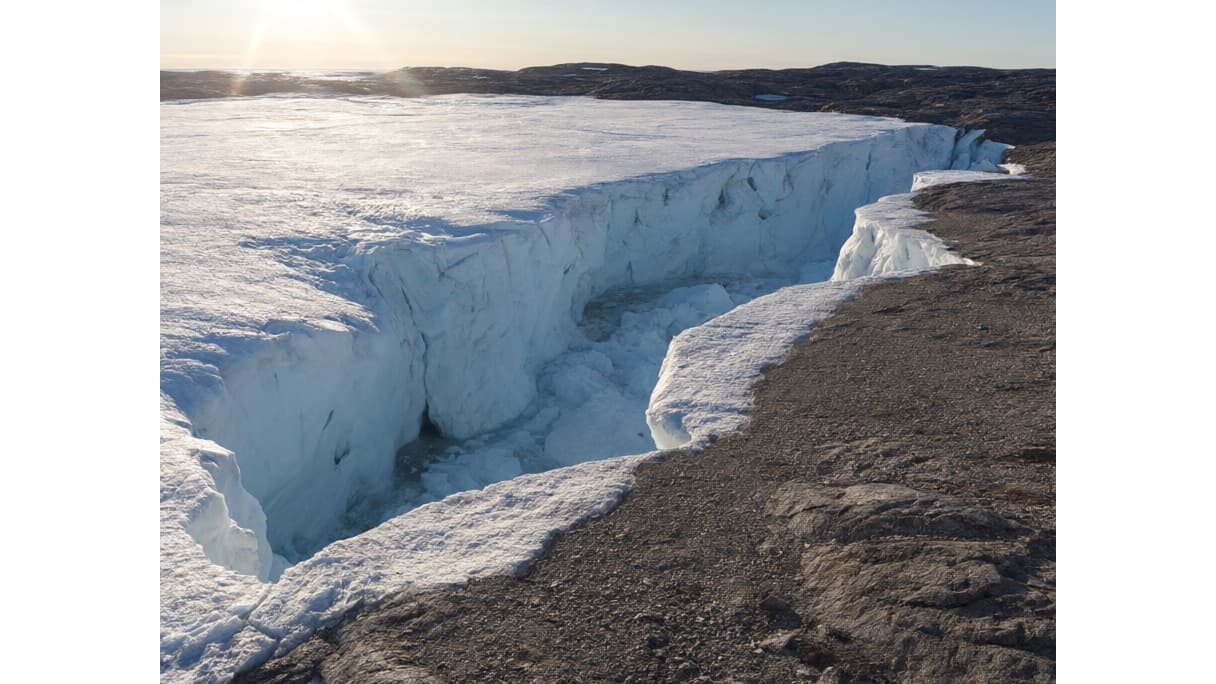
AI-generated image · US National Wire
Opinion: New data on the Barnes Ice Cap proves that human emissions didn't just nudge the climate—they violently derailed a planetary cycle.
As a columnist focused on deployment and tangible outcomes, I tend to ignore the noise of theoretical projections. I look for the physical evidence of where we are. The latest research published in the journal *Science*, as *Wired* first reported, provides a stark, physical record that should serve as a wake-up call for anyone still doubting the scale of human impact on the Earth.
According to reporting by *Wired*, a study led by Nicolás Young, a paleoclimatologist at the Lamont-Doherty Earth Observatory at Columbia University, has analyzed the Barnes Ice Cap on Canada’s Baffin Island. By using exposure dating with Beryllium-10 and analyzing preserved mosses and lichen, Young and his team determined that this ice cap—a remnant of the massive Laurentide Ice Sheet—began growing again roughly 2,000 years ago.
For millennia, the planet has operated on Milankovitch Cycles—natural shifts in orbit and rotation that dictate the ebb and flow of ice ages and interglacial periods. The data suggests we were moving back toward a glaciation period. In fact, Young notes that this evidence supports a hypothesis discussed at a Brown University meeting in the early 1970s, where scientists warned President Richard Nixon that a glaciation period was imminent.
But here is the part that should terrify us: the speed of the reversal.
Starting in the 1960s, the Barnes Ice Cap stopped growing and began to retreat. *Wired* reports that since the 1980s, the edges of the ice cap have retreated by an average of four meters per year. This reversal coincides directly with the ramp-up of carbon pollution. As Young puts it, this modern retreat has effectively reversed 2,000 years of net expansion.
It is easy to get lost in the paleobotanical fascination of the study—the way dead mosses preserve a timeline of glacial movement. But the real story isn't the moss; it's the violence of the shift. We didn't just slightly alter the temperature; we exerted enough force to overwrite a natural planetary cycle that had been in motion for two millennia.
Andrew Wickert, an associate professor of environmental science at the University of Minnesota Twin Cities, observed that the fact we have already caused the North American ice sheet to retreat, even as emissions were just starting to ramp up, is "significant."
Climate deniers have long pointed to the cooling trends of the 1970s or the warnings of the Nixon era as proof that global warming is a hoax. This research proves the opposite. The scientists were right about the pending glaciation; we simply burned enough fossil fuels to kill it in the cradle.
When we look at the Barnes Ice Cap, we aren't seeing a natural transition. We are seeing a planetary system that has been shoved off its tracks. If we can erase 2,000 years of geological progress in a few decades, we have to stop asking if we are impacting the planet and start asking how much more the system can take before the retreat becomes an irreversible collapse.