
The Mineral Mirage: Why UK Net-Zero Goals Depend on Chinese Refineries

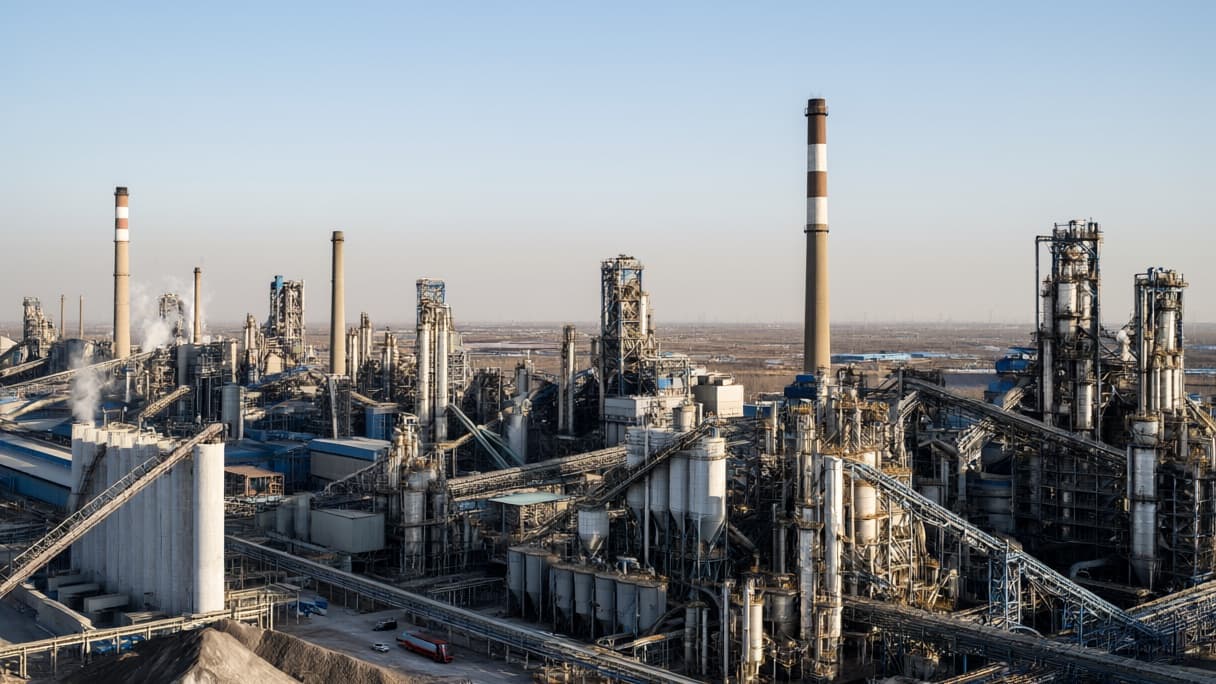
AI-generated image · US National Wire
A parliamentary committee warns that Britain's clean energy and tech ambitions are dangerously exposed to Chinese supply chain dominance, with alternatives potentially a decade away.
Opinion: The physical reality of the supply chain suggests that Britain's green dreams are built on a foundation controlled almost entirely by Beijing.
As first reported by The Register, the House of Commons Business, Innovation, Science and Trade Committee has issued a stark warning: the UK's technological and climate goals are fundamentally dependent on minerals processed in China. In a report published November 6, 2026, the committee revealed it cannot confidently confirm that the government has passed any of the ten supply security tests established to measure the credibility of the UK's mineral strategy.
The core issue is processing. Citing International Energy Agency data, the committee reports that China is the leading refiner for 19 of the 20 strategic minerals, holding an average market share of 70 percent. This includes a near-monopoly on gallium (95 percent) and germanium (93 percent), both essential for radar and communications semiconductors.
This vulnerability is already evident. The Register reports that China's rare earth export controls in April 2025—triggered by US tariffs—caused manufacturing ripples and temporary automotive plant closures. Furthermore, the report highlights China's monopoly over the processing of yttrium and erbium, as previously warned by IEEE Spectrum.
Committee chair Liam Byrne stated that Britain cannot deliver net zero, build AI, or "re-arm" the country without securing these minerals. He noted that high energy costs and "outdated rules" at public finance institutions leave the UK exposed. To mitigate this, the committee proposes a five-part prescription: identifying critical capabilities, mapping mineral needs, expanding domestic production/recycling, pooling purchasing power with allies, and establishing a dedicated Critical Minerals Finance Facility. This would involve expanding the remit of UK Export Finance and allowing British International Investment to take equity stakes in overseas projects.
From my perspective, this report exposes the gap between political ambition and physical reality. You cannot legislate a refinery into existence overnight. If the UK continues to treat mineral security as a secondary policy concern, the net-zero target remains a fantasy. The committee's finding—that ministers failed every single security test—suggests the government is playing a game of catch-up where the finish line is moving further away.