
The Heat Sink: Why Germany's AI Ambitions Collided With Its Climate Goals

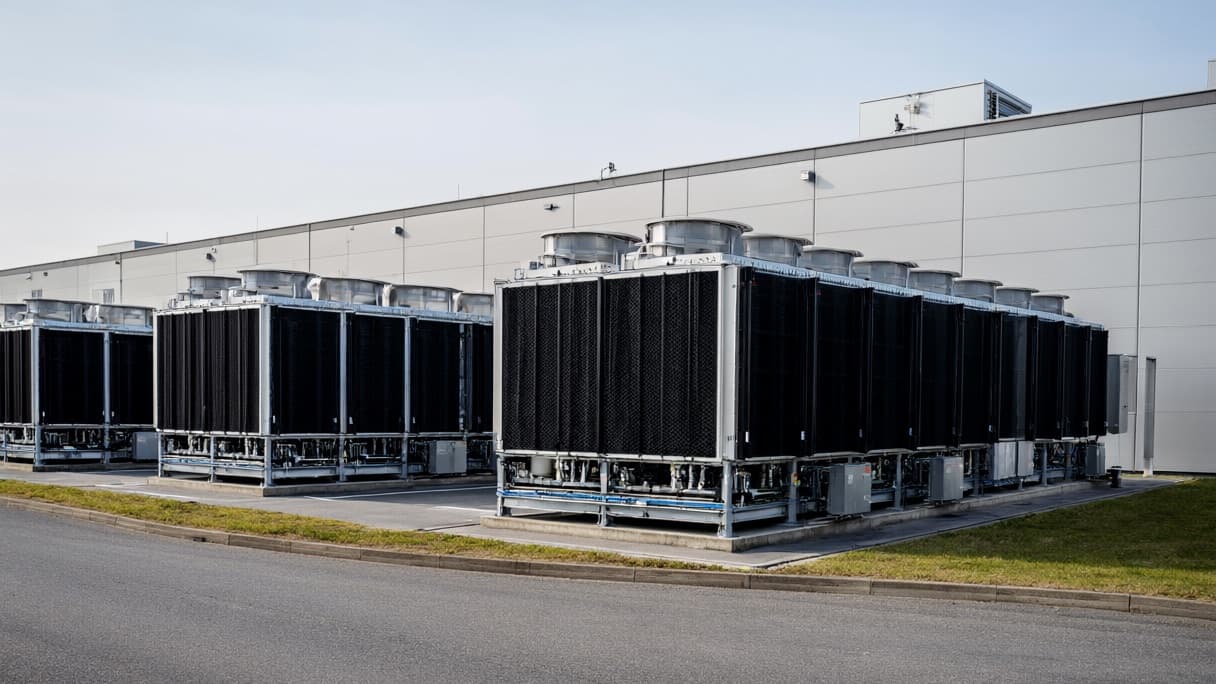
AI-generated image · US National Wire
Germany's attempt to mandate waste-heat recycling for data centers reveals a critical tension: the gap between technical feasibility and urban infrastructure reality.
Q: What was the German government's original goal regarding AI and data centers?
A: As Wired first reported, the German government aimed to double the size of its data center fleet and quadruple its available compute for AI models by 2030. This strategy was designed to boost a struggling economy and reduce Germany's reliance on the United States for AI access.
Q: How did the 2023 Energy Efficiency Act attempt to align these AI goals with climate targets?
A: To support EU goals of reducing greenhouse gas emissions by 55 percent by 2030, the 2023 Energy Efficiency Act mandated that all new data centers recycle some of their waste heat. Patrick Graichen, a former senior official at Germany’s Ministry for Economic Affairs and Energy, told Wired that data centers are a source of clean heat that could be funneled into municipal heating systems.
Q: Why did the German government move to walk back these requirements in June?
A: Data center firms argued the mandates made building in Germany nearly impossible. The German Data Center Association described an early version of the bill as a "data center prevention act." Barbara Smitten, associate director for critical systems at consulting firm Cundall, told Wired that developers felt the burden was placed entirely on them, even when factors outside their control—such as the lack of a municipal heating system or industrial offtake like greenhouse agriculture—made heat reuse impossible.
Q: What are the real-world consequences of these regulatory hurdles?
A: Wired reports that several major projects have collapsed in the last 18 months. Stack Infrastructure canceled a $3 billion facility in Hesse, and the state-owned Komm.ONE pulled out of a development in Baden-Württemberg. Specifically, Komm.ONE attributed its withdrawal to the burdens imposed by the Energy Efficiency Act.
Q: How does the amended legislation change the requirements for developers?
A: Under the amended bill, which is awaiting ratification by the German parliament, operators are no longer obligated to reuse waste heat. Instead, they must only scope out the possibility and assess whether recycling the heat is technically and economically feasible. Katherina Reiche, federal minister for economic affairs and energy, stated that these practical rules create conditions for economic growth and digital sovereignty.
Q: Is the failure to recycle heat a technical problem or a policy problem?
A: Opinions are split. John Booth, managing director at IT consultancy Carbon3IT, told Wired there is no technical reason why data centers cannot use waste heat, as the concepts are well known, suggesting the issue is a lack of organizational will. Conversely, Patrick Graichen argues that the availability of a heat offtake should simply be a default requirement for site selection, telling Wired that industry objections are groundless.
Q: Could removing these mandates actually hinder data center growth in the long run?
A: While Barbara Smitten suggests the amendment makes the German market more attractive, Patrick Graichen warns that sacrificing climate targets could trigger public backlash. Wired notes that a small German town already voted in February to block a $2.5 billion data center development due to climate concerns, mirroring the permitting freezes and moratoria seen in the US.