
The Blind Spot in Britain's Balance Sheet: Why Climate Ignorance is a Deployment Dead End

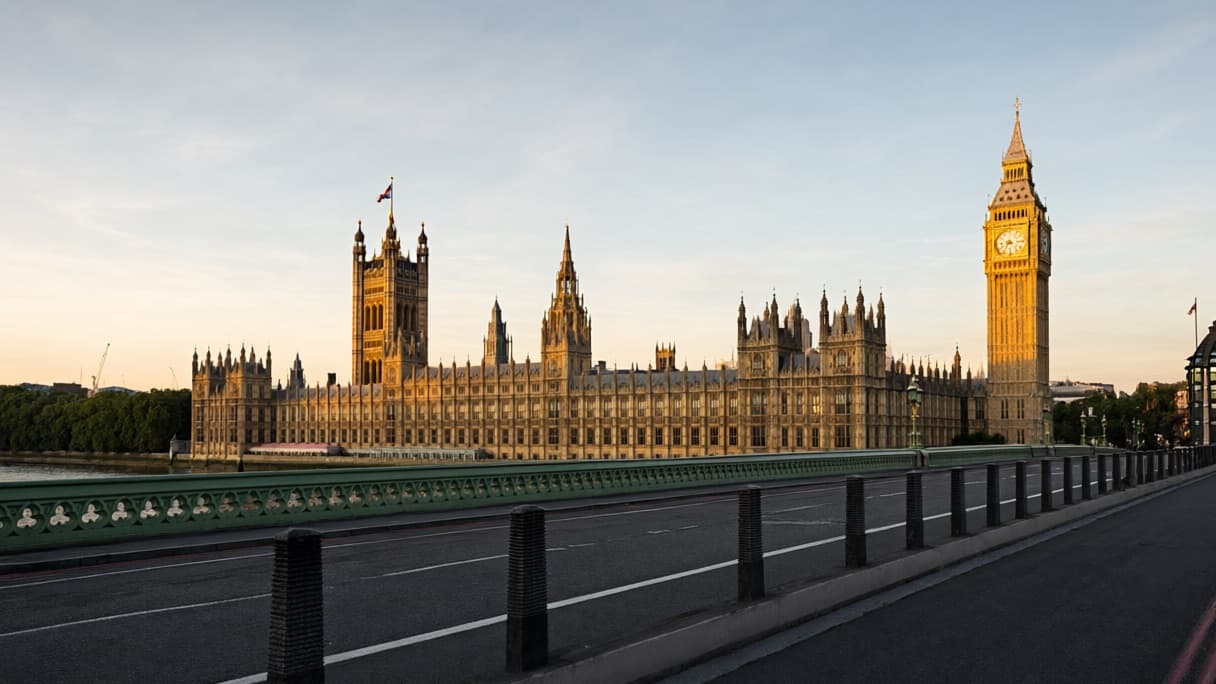
AI-generated image · US National Wire
Opinion: The UK government's inability to quantify the costs of the low-carbon transition isn't just a reporting failure—it is a systemic risk to the nation's infrastructure.
In the world of clean tech, we often talk about the 'deployment gap'—the space between a proven technology and its widespread application in the real world. Usually, we blame this gap on supply chains, permitting, or capital. But as I look at the latest findings regarding the UK public sector, as first reported by The Register, it is becoming clear that there is a more insidious bottleneck: a total failure of governmental quantification.
According to reporting from The Register, a new report from the National Audit Office (NAO) reveals a startling reality. While public bodies in the UK recognize that climate change and the shift to low-carbon energy will drive up operating costs and energy charges, very few of them actually have a clear picture of those risks. Even more concerning is that while some bodies identified potential financial impacts, they were frequently unable to provide even approximate costs for them.
This is where the pragmatic optimist in me hits a wall. We cannot deploy what we cannot measure. When the National Audit Office notes that bodies controlling significant infrastructure are particularly worried about decarbonization and adaptation costs, but cannot put a number to them, we aren't just dealing with a bureaucratic lapse. We are dealing with a strategic blindness that threatens the very resilience of the state.
As reported by The Register, the NAO found that public bodies are significantly worse at articulating 'transition risks' than they are at identifying 'physical risks.' It is relatively easy to point to a flood map or a drought projection—physical risks like higher winds, increasing temperatures, and flooding are explained in greater detail in disclosures. But the transition—the actual process of moving to a low-carbon economy—remains a blur.
According to the NAO report, the transition risks that were identified include supply chain disruptions and the raw financial cost of the shift. These costs encompass the necessity of switching to lower-carbon energy sources, investing in new technology, complying with evolving regulations, and managing the volatile pricing and availability of energy, water, materials, and specialist skills. Yet, the fact remains: these are listed as risks without being costed as realities.
This lack of precision is a critical failure. If the government cannot quantify the cost of switching to new technology or the impact of material fluctuations, how can it possibly plan the deployment of the infrastructure required to meet its climate goals? You cannot build a resilient energy grid or a modernized transport network on 'approximate' guesses that are, in reality, non-existent.
We see the real-world consequences of this lack of foresight in specific sectors. The Register highlights a report from the climate charity Global Action Plan, which found that 84 percent of proposed datacenter developments are located in areas that are currently water-stressed or are projected to be so by 2040. This is a textbook example of the 'blind spot.' When datacenter water consumption intensifies the strain on systems already stressed by climate change, it isn't just an environmental issue—it's an operational risk that should have been quantified during the planning phase.
To his credit, Gareth Davies, the head of the NAO, has been clear about the stakes. He stated that Parliament requires clear information regarding how finances, service provision, and infrastructure resilience are being managed in the face of climate change. Without that data, Parliament is essentially flying blind.
His Majesty’s Treasury (HMT) has attempted to address this by setting rules for climate-related financial disclosure for larger central government bodies. Disclosure rules have existed since 2022, and the first set of reports for the 2025-26 financial year has now been completed. While Davies suggests that this requirement is an 'important first step' and expects the reporting to improve over time, 'important first steps' do not build power plants or secure water supplies.
From my perspective, the danger here is that the UK government is treating climate risk as a compliance exercise rather than a deployment strategy. When the NAO finds that transition risks are poorly understood and poorly costed, it suggests a culture where the goal is to check a box on a disclosure form rather than to fundamentally re-engineer the national budget for a low-carbon reality.
If we want to move from funding rounds and pilot projects to actual, scaled deployment, the public sector must stop treating the 'cost of transition' as an abstract threat and start treating it as a line item. The transition to low-carbon energy is not a hypothetical event; it is an active industrial overhaul. To treat the costs of that overhaul as 'unquantifiable' is not just a failure of accounting—it is a failure of leadership.
Until the UK government can move beyond listing risks to actually costing them, the transition will remain stalled by uncertainty. We don't need more disclosures; we need a balance sheet that reflects the actual cost of survival in a changing climate.