
The Valley's Influence P&L is Deep in the Red

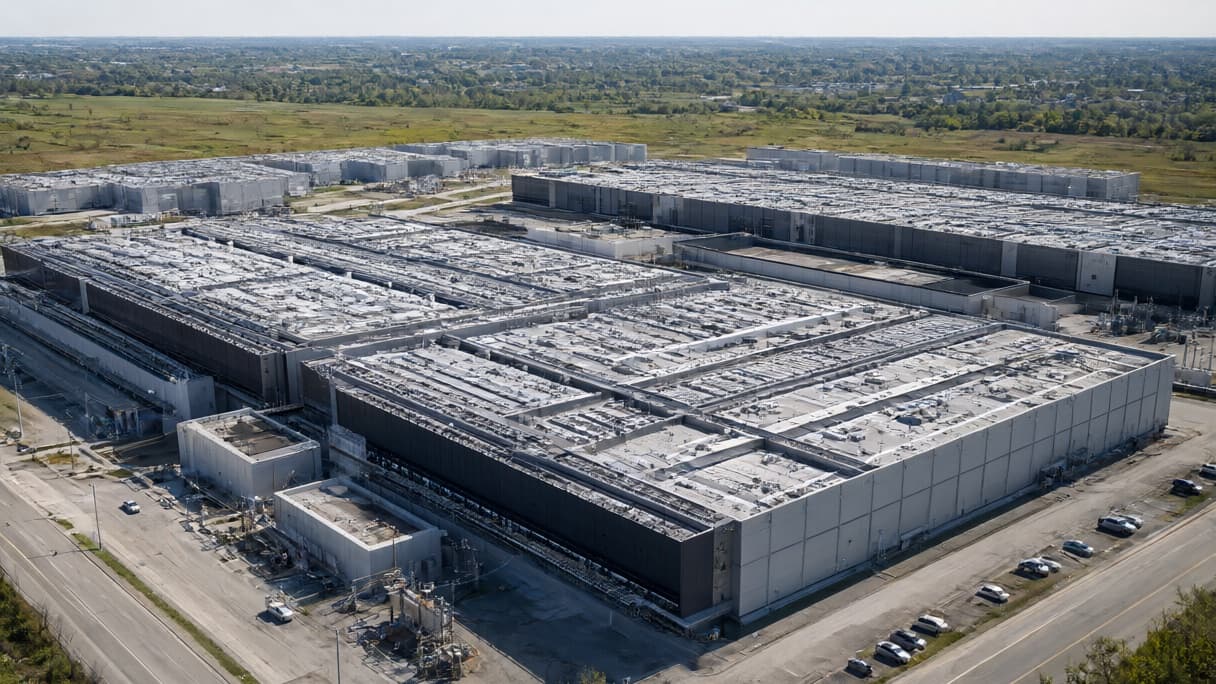
AI-generated image · US National Wire
Opinion: Silicon Valley's techno-optimists treated the American electorate like a seed-stage startup, only to find that political capital doesn't scale with a checkbook.
In the venture capital world, there is a seductive delusion that any problem can be solved with enough capital and a bold enough pitch. For the last few years, Silicon Valley's donor class has operated under this exact premise, treating the American political process as just another series of acquisitions. But as any seasoned analyst of the P&L will tell you, there is a difference between buying a company and buying a country.
Looking at the recent election results, it is clear that the 'techno-optimist' class has suffered a catastrophic loss on its investment. They bet heavily on a vision of the future where the masses simply accept the 'bad things'—job losses, death, and the centralization of power—for the sake of AI progress, a worldview explicitly championed by OpenAI CEO Sam Altman in a Politico interview. Instead, voters across Red, Blue, and Purple states delivered a resounding repudiation of what 404 Media describes as a 'cruelty, corruption, and depravity economy.'
Nowhere was this failure more evident than in the physical infrastructure of the AI revolution: the data center. According to 404 Media, voters explicitly rejected data center proposals in 38 out of 40 races across 13 states. Six cities banned them outright, and 12 others capped their power usage. The Valley thought it could bully local officials into compliance, but the results suggest a total collapse of that strategy. In Burgin, Kentucky, mayoral candidate George Hensley lost to a write-in candidate, Joe Monroe, after voting for a hyperscale project. In Yukon, Oklahoma, the mayor was ousted in a recall election for supporting a similar project. Furthermore, voters in Emporia, Kansas, approved a ban on high-impact data centers.
Then there is the Texas case study—the ultimate failed bet. Elon Musk spent half a billion dollars on the midterms, with $224 million specifically targeted at Texas. He aligned himself with Governor Greg Abbott, who had positioned Texas as the 'epicenter of AI development' during a 2025 press conference with Google CEO Sundar Pichai. Abbott accepted over $9 million from data center donors, but his attempt to 'pause' projects as sentiment shifted was exposed as a sham by 404 Media. The result? Abbott lost his bid for a fourth term by more than 700,000 votes to Democratic governor-elect Gina Hinojosa, who made the data center issue a pillar of her campaign.
From a balance sheet perspective, the 'return on influence' for these oligarchs is abysmal. Musk, who 404 Media reports was given the keys to the federal government to slash programs and replace human expertise with AI and 'teenaged idiots,' found that his financial leverage had a ceiling. While the Trump administration rewarded this fealty by letting Big Tech operate without restraint and pardoning crypto criminals, the public's appetite for this kleptocracy has vanished.
As Michael Whitesides of Local Progress told 404 Media, voters aren't seeing the promised benefits of AI in their daily lives; they are seeing higher utility bills, poisoned air, and more expensive basic goods. They are rejecting the 'billionaire backed monstrosities' taking up space in their communities.
Musk’s reaction to the defeat was telling. After a period of silence as the results rolled in, he posted on X that 'Data centers in space looking pretty appealing right now.' It is the classic founder's pivot: when the market rejects your product on Earth, you try to sell it in orbit. But for the donor class, the lesson should be simpler. You cannot disrupt a democracy the way you disrupt a taxi industry. The political P&L is in the red, and no amount of 'techno-optimism' can hide the deficit.