
The Token Trap: Revolut’s Pivot to Self-Hosting as a Margin Play

AI-generated image · US National Wire
By ditching commercial AI services for a self-hosted GLM architecture, the fintech giant is proving that vertical integration is the only way to scale engineering without prohibitive costs.
In the high-stakes world of fintech, the difference between scaling and bleeding often comes down to the unit economics of the tech stack. As The Register first reported, Revolut has managed to slash its AI coding inference costs by approximately 90 percent in less than a year by pivoting away from commercial AI coding services.
For many firms, the allure of frontier models like Claude or Gemini is the ease of deployment. But for Revolut, that convenience came with a price tag that threatened ROI. David Abitbol, ops and infrastructure lead at Revolut, told the AI Engineer conference in New York that the company was initially skeptical of AI costs, noting instances where engineers spent between $1,000 and $10,000 a month. To curb this, the company initially imposed strict budget limits on token usage.
*Opinion: This is where the 'token trap' becomes a productivity bottleneck. When engineers are forced to ration tokens, they prioritize only the most critical tasks, leaving the high-volume, low-complexity work—the very tasks AI is best suited for—untouched.*
To break this cycle, Revolut moved to a self-hosted model. The company transitioned from GLM-5.1 to GLM-5.3, a model developed by the Chinese open weights developer Z.ai. The financial shift was stark: self-hosting GLM 5.1 cost roughly $0.30 per million input/output tokens, which The Register reports is about a tenth of the cost of using Anthropic's Claude Code or OpenAI's Codex.
This move wasn't just about the bottom line; it was about unlocking engineering velocity. Following the rollout of these tools to about 2,000 engineers, Abitbol noted that lead time improved by 70 percent and coding time by 60 percent. Crucially, the biggest gains didn't come from the code itself, but from freeing AI to handle the 'grunt work' of debugging and managing Jira and Confluence tickets—tasks that were previously avoided to save tokens for the end of the quarter.
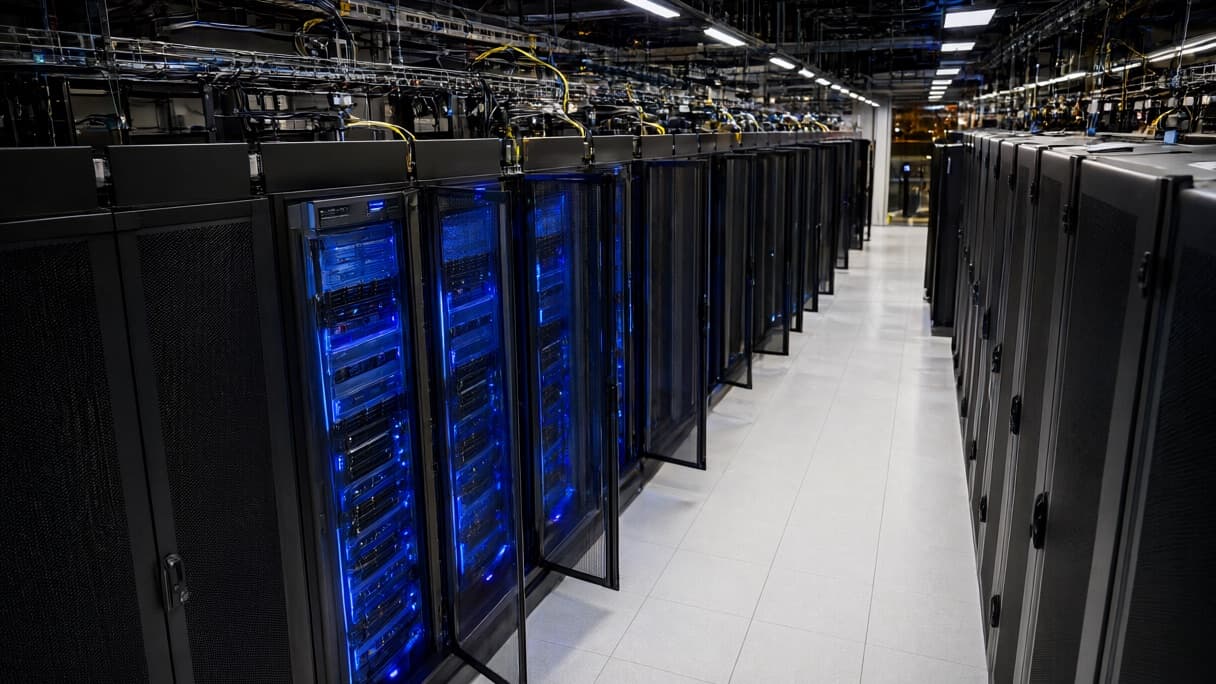
Scaling this required significant hardware and optimization. Revolut deployed 56 Nvidia B200 GPUs (equivalent to seven eight-GPU DGX B200 systems) to serve GLM-5.3. However, Abitbol noted that the real performance wins came from technical tuning, including NVFP4 quantization, disaggregated prefill and decode, and hyperparameter adjustments. He also pushed back on the industry trend of massive context windows, calling long context a 'scam' and noting that 256,000 tokens is the actual requirement, despite the ability to serve one million.
Revolut has optimized for the human element of the workflow, targeting a sub-3 second time to first token to avoid engineer frustration. While the company still uses a model router to send vision-based UI queries to GPT Luna or Gemini, the bulk of code generation now lives on-prem. As Abitbol put it, open source is now a priority because the economics are favorable and the risk of 'bill shock' is eliminated.
By treating AI infrastructure as a capital expenditure rather than a variable operating cost, Revolut is signaling that the only way to truly scale the 'AI engineer' is to own the means of production.