
The Gemini Discount: Google's Price Cut Betrays a Fragmented Experience

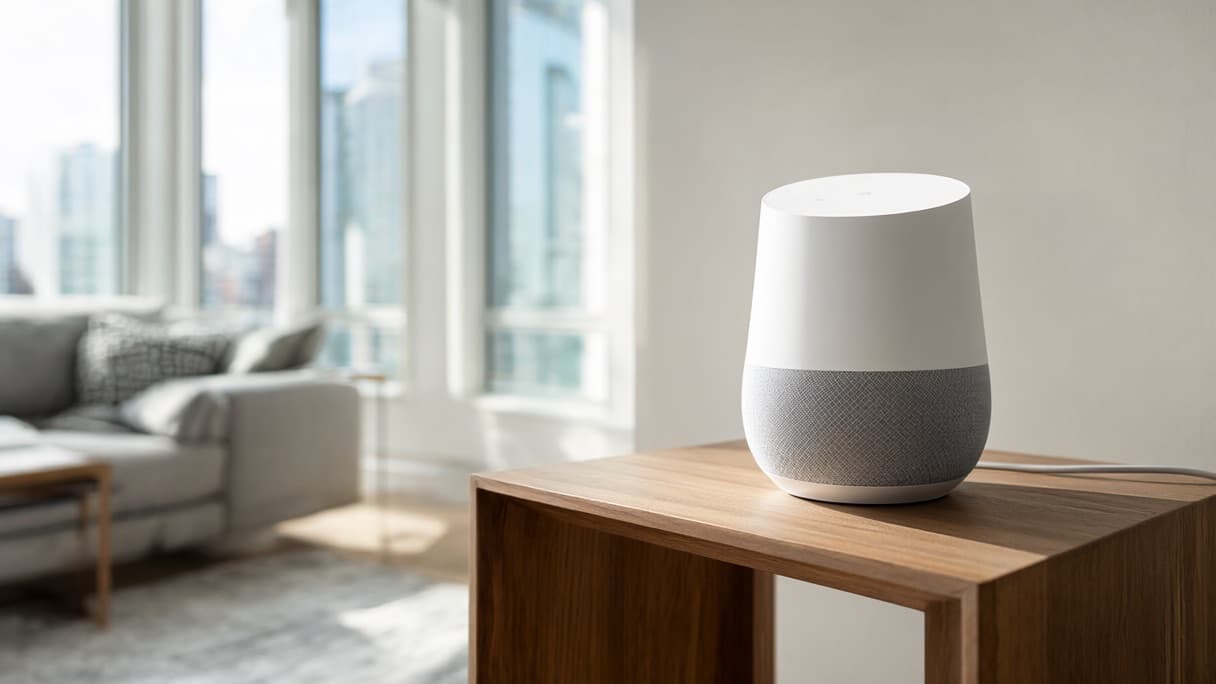
AI-generated image · US National Wire
Google is slashing the price of its latest smart speaker just months after launch, signaling that the 'AI-powered' premium isn't sticking.
OPINION: Let's call this what it is. When a tech giant drops the price of its flagship hardware just months after launch, it isn't a gesture of generosity—it's an admission of a value gap.
As The Verge first reported, Google has slashed the price of its Gemini-powered Home Speaker to approximately $79, a 21 percent discount from its $100 launch price. The deal is currently appearing at Target, Walmart, and Best Buy. For a device that launched in June and represents Google's first smart speaker in several years, this rapid descent in pricing is telling.
Google wants you to believe that the integration of Gemini—which The Verge notes is far superior to the old Google Assistant at handling complex requests and natural language—justifies the hardware. Indeed, Jennifer Pattison Tuohy's testing for The Verge showed the speaker could manage multiple smart home commands simultaneously and respond to conversational cues, such as adjusting the air conditioner when a user mentions feeling too hot.
But look closer at the fine print, and the "premium" experience starts to look like a fragmented mess. The Verge reports that some of the most touted features, including Gemini Live—which allows for extended conversations without repeating the wake word—are locked behind a $10-a-month Google Home Premium subscription.
Furthermore, while the AI is a leap forward, it isn't a finished product. The Verge reports that the system can still be slow and unreliable when answering general knowledge questions. We are seeing a classic carrier-style play: sell the hardware at a discount to get the device in the home, then nickel-and-dime the consumer with monthly subscriptions to actually unlock the "smart" capabilities promised in the marketing.
On the hardware front, the trade-offs are equally apparent. While David Pierce found the device sounded sharper and louder than the Amazon Echo Dot Max, and Tuohy praised its 360-degree sound and compact design, the older Nest Audio still holds the crown for overall sound quality.
Google has added some legitimate utility—The Verge notes the speaker supports Matter, includes a Thread border router, and can act as an audio output for the Google TV Streamer 4K. But these are connectivity wins, not AI wins. By dropping the price to $79, Google is tacitly admitting that a speaker that is "slow and unreliable" at times, and requires a monthly fee for its best AI features, simply isn't worth a $100 premium sticker price.