
The Duo Dilemma: Apple's $1,999 Folding Gamble

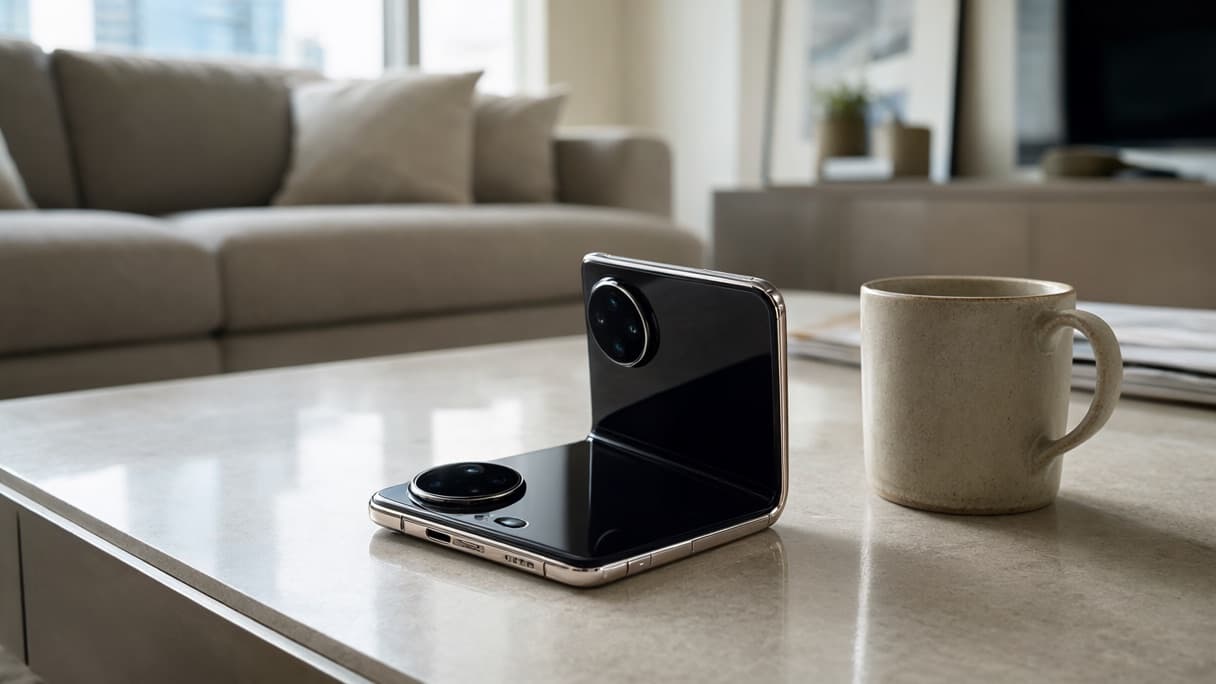
AI-generated image · US National Wire
Apple's first foldable arrives with polished hardware, but a steep price tag, regressive biometrics, and a fragmented app ecosystem suggest consumers are paying a premium to be beta testers.
OPINION: Apple has finally entered the folding phone arena with the iPhone Duo, arriving seven years after Samsung pioneered the category with the Galaxy Fold. While the hardware is being praised for its polish, a closer look at the iPhone Duo reveals a device that asks consumers to pay a staggering $1,999 for a series of compromises and technical gambles.
Let's start with the most glaring regression: the death of Face ID. For nearly a decade, Apple marketed facial authentication as the future of the iPhone. Yet, on the Duo, Face ID is gone, replaced by the older Touch ID fingerprint sensor located on the right side. Wired reports that this is likely because Face ID technology requires too much space for the Duo's thin chassis. For users accustomed to the speed of staring at a screen to unlock their device, reaching for a side sensor is a step backward in user experience, packaged as a flagship innovation.
Then there is the physical reality of the device. While Julian Chokkattu of Wired describes the "passport" design as a refined shape, the sheer bulk is a liability. According to reporting from The Verge, the Duo is a dense, heavy phone. Allison Johnson of The Verge notes that the device is significantly wider than the iPhone 13 Mini—84.1mm compared to 64.2mm—making one-handed operation a struggle. The weight is equally concerning; Wired reports the Duo weighs 254 grams, making it heavier than an iPhone 18 Pro Max and significantly heavier than the 201-gram Samsung Galaxy Z Fold8.
Even the accessories are an afterthought. While the Duo supports MagSafe, the integration is clumsy. Wired reports that if you attach the unfolded phone to a magnetic car dock or tripod, the uneven weight distribution causes the device to tip to one side. More egregiously, Apple's own official MagSafe wallet sticks out awkwardly past the lower edge of the phone because the Duo is shorter than standard iPhones. Apple has no official solution for this, leaving consumers to hunt for third-party accessories to fix a design flaw in a $2,000 product.
But the real gamble isn't the hardware—it's the software. The iPhone Duo features a 5.4-inch outer screen and a 7.6-inch inner display, yet the app ecosystem is in shambles. Wired reports that many third-party apps are not optimized for these dimensions, resulting in a "phone-sized" app centered on the screen with thick, black bars on the sides. While some developers like Slack, Instagram, DoorDash, and WhatsApp have optimized for iOS 27.1, Wired notes that even these can have broken user-interface elements.
Apple's rigid software philosophy further hampers the experience. Wired reports that the Duo enforces a strict 50-50 split-screen ratio, preventing users from resizing apps or adding a floating third app—capabilities that have existed on Android for years. Furthermore, Apple refuses to allow the stacking of two apps in portrait orientation, unless one is a video app.
For $1,999, the consumer is essentially paying for the privilege of waiting for developers to catch up. As Wired points out, the Duo is currently back-ordered for several weeks, which might be the only saving grace for those who want a functional app library upon arrival. Between the regressive biometrics, the cumbersome weight, and the unoptimized software, the iPhone Duo feels less like a finished product and more like an expensive experiment where the customer foots the bill.