
The '50 Percent Off' Mirage: How Holiday Headphone Deals Lock You In

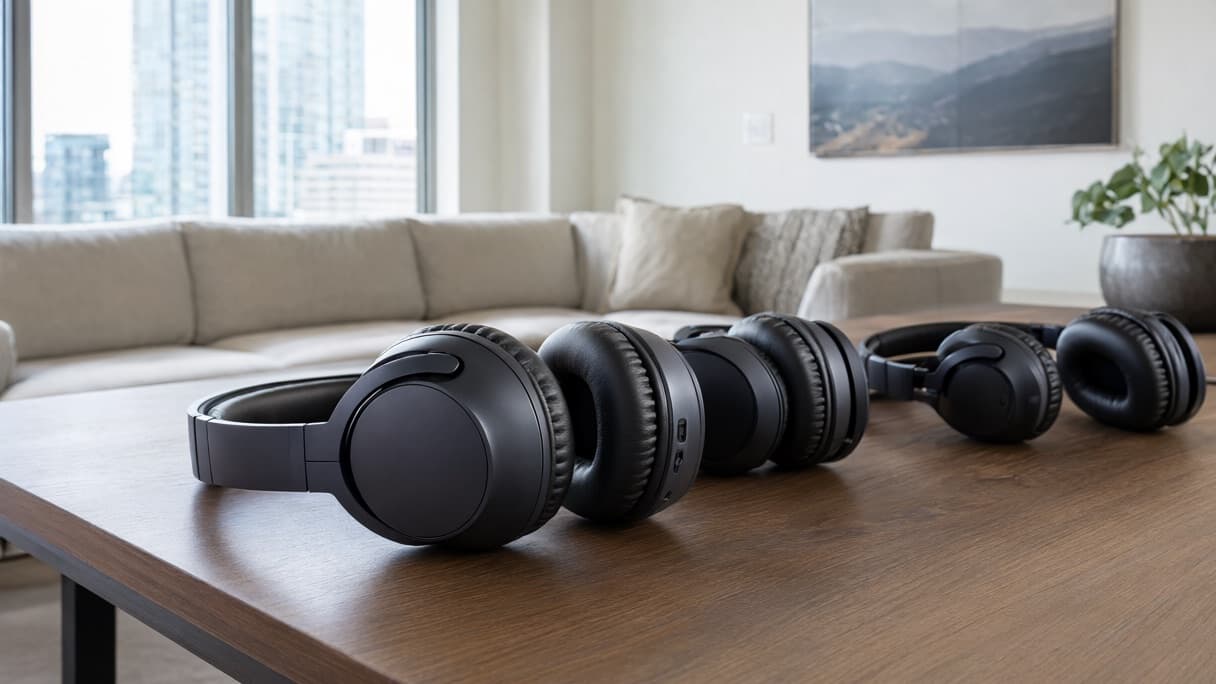
AI-generated image · US National Wire
Retailers and carriers are dangling massive discounts on 'sunsetting' gear, but the real price is the proprietary ecosystem you're buying into.
OPINION: Every November, the same shell game begins. Retailers and carriers plaster '50 percent off' banners across their storefronts, creating a sense of urgency that makes consumers feel like they've beaten the system. But as a connectivity columnist, I see these deep discounts for what they really are: a mechanism to clear out old inventory while tethering you to a specific brand's ecosystem.
Take a look at the current landscape reported by Wired. We are seeing massive price cuts on older hardware that is being systematically phased out. For instance, the Sony WH-1000XM5 is being slashed by as much as 54 percent at Amazon, dropping from $400 to $186. Wired reports that this model has been effectively replaced by the more premium XM6 and the cheaper XM4C. Similarly, the Sony WH-CH720N is seeing 50 percent discounts at Walmart and Amazon because Sony recently launched the WH-CN730N to replace it.
It is a classic bait-and-switch. The 'deal' isn't a gift to the consumer; it's a necessary purge of 'sunsetting cans' to make room for the next iteration. When you buy into these discounts, you aren't just buying a pair of headphones—you're buying into a proprietary loop.
Consider the Apple ecosystem. Wired highlights the AirPods Pro 3 at a 20 percent discount ($199 at Amazon), noting they 'seamlessly sync' with Apple devices. Then there are the AirPods Max 2, which Wired describes as the best over-ear option specifically for those with an iPhone or MacBook. By offering these discounts, Apple ensures that once you've invested in their audio hardware, the friction of switching to a competitor becomes too high. You aren't just buying a product; you're buying a reason to never leave the i ecosystem.
Google is playing the same game with the Pixel Buds Pro 2, currently discounted by 26 percent to $169 at Amazon and Best Buy. Wired identifies these as their 'top Android earbuds.' By positioning these as a 'middle ground' between budget and premium, Google locks Android users into their specific software experience.
Even the 'budget' options are part of the strategy. The Bose QuietComfort Headphones (2nd Gen) are seeing a 45 percent discount at Amazon, bringing the price down to $199. While this makes the price point attractive, it serves the same purpose: getting the brand's noise-canceling technology into your ears so you remain a Bose customer when the next 'Ultra' model arrives.
When you see a 50 percent discount, ask yourself why the price was inflated to begin with. These companies aren't losing money; they are managing lifecycles. They inflate the MSRP, wait for the 'Early Black Friday' window, and then offer a 'steal' that locks you into their proprietary world. You aren't winning the game—you're just playing the role they've assigned you in their quarterly earnings report.