
Omen AI's Aquatic Labs Bet: Solving a Bottleneck or Padding the Valuation?

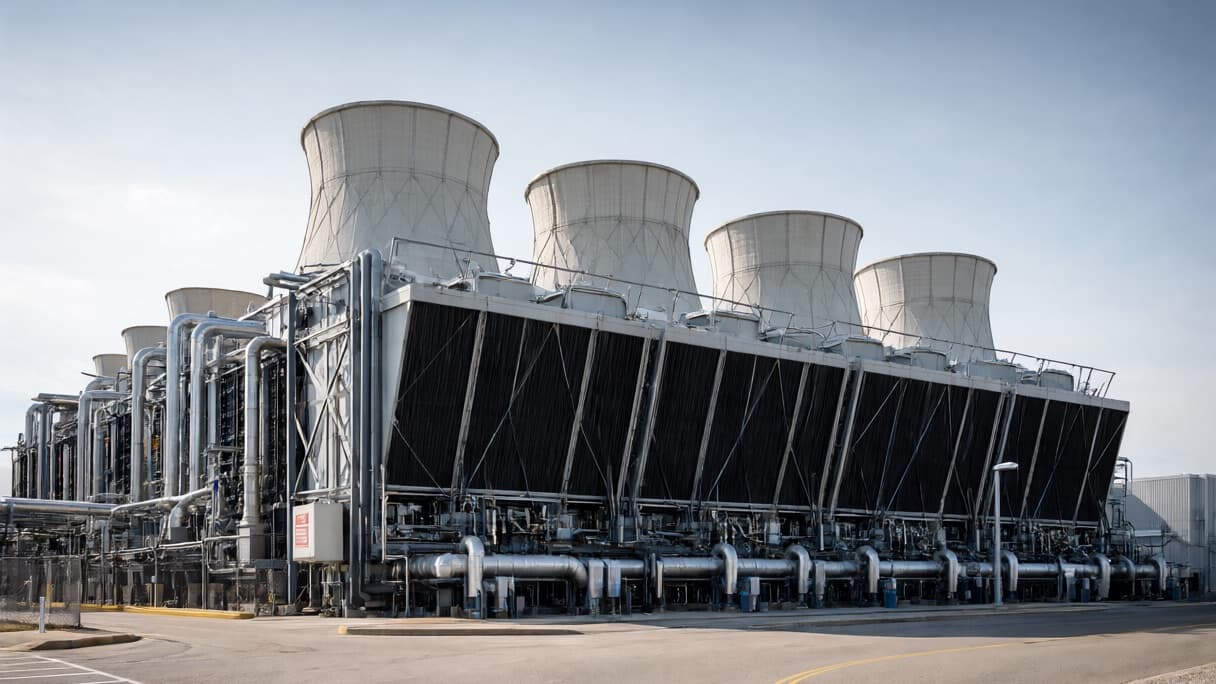
AI-generated image · US National Wire
A $16 million acquisition aims to automate data center cooling monitoring, but the real test will be whether these combined sensors can scale to 1 GW of chips by 2027.
In the current AI gold rush, the most overlooked liability isn't the GPU shortage—it's the water bill. According to The Water Foundation, U.S. data centers currently consume 17 to 19 billion gallons of water annually for chip cooling, a figure projected to triple over the next five years. For the VCs and hyperscalers funding this buildout, that creates a massive political and financial headache.
Enter Omen AI. As first reported by TechCrunch, the startup founded in 2024 is betting that the solution to this infrastructure crisis is real-time monitoring. Currently, testing cooling fluids is a manual, multi-day process involving external laboratories. Omen AI is building sensors to detect valve failures and bacteria growth in real-time to prevent system chokes.
**The Consolidation Play**
As reported by TechCrunch, Omen AI is acquiring its competitor, Aquatic Labs, in a $16 million deal involving cash and stock. The merger follows a $31 million Series A round raised by Omen in June. From a technical standpoint, the deal is a marriage of complementary sensor capabilities: Omen’s tech identifies specific elements in the water, while Aquatic Labs' tech tests alkalinity.
According to Aquatic Labs CEO Allan Adams, combining these tools provides a "much richer picture" of the fluid, automating a previously slow process. The deal also unites two very different founder archetypes. Omen founder Zach Laberge is a high-school dropout who previously worked on hydraulics for construction machinery; Adams is a former MIT professor and Woods Hole Oceanographic Institute researcher specializing in ocean sensing. Adams will join the company as chief science officer.
**The P&L Perspective**
From a business model standpoint, the value proposition is uptime. TechCrunch reports that when cooling systems fail, operators often dump the water and shut down operations to avoid damaging expensive equipment. Real-time monitoring allows operators to extend the life of the fluid and reduce cleanup costs.
Laberge told TechCrunch that the company's initial sensors will monitor chips pulling 250 to 300 MW of power by the end of this year—assets valued between $5 billion and $7 billion. The company aims to eventually expand its reach to the equivalent of 1 GW of chips by late 2027.
**The Market Skepticism**
While some investors are cooling on AI infrastructure—leading to recent drops in hyperscaler stocks—Laberge remains unfazed. He told TechCrunch that because Omen works with projects already financed or under construction, shifting sentiment doesn't impact their current pipeline. In his view, the market remains the "biggest market in human history," even if the total addressable market were to be halved.
**Opinion:** On paper, this is a classic 'roll-up' of pre-revenue hardware plays. While the integration of alkalinity and element sensing sounds like a genuine technical upgrade, the real question is whether Omen can move from 'monitoring' to 'mission-critical' fast enough to justify the valuation before the next round. If they can actually hit that 1 GW target by 2027, they've solved a bottleneck. If not, they've just spent $16 million to buy a partner.