
The Sanitized Stadium: Dortmund's War on Phones is a War on Authenticity

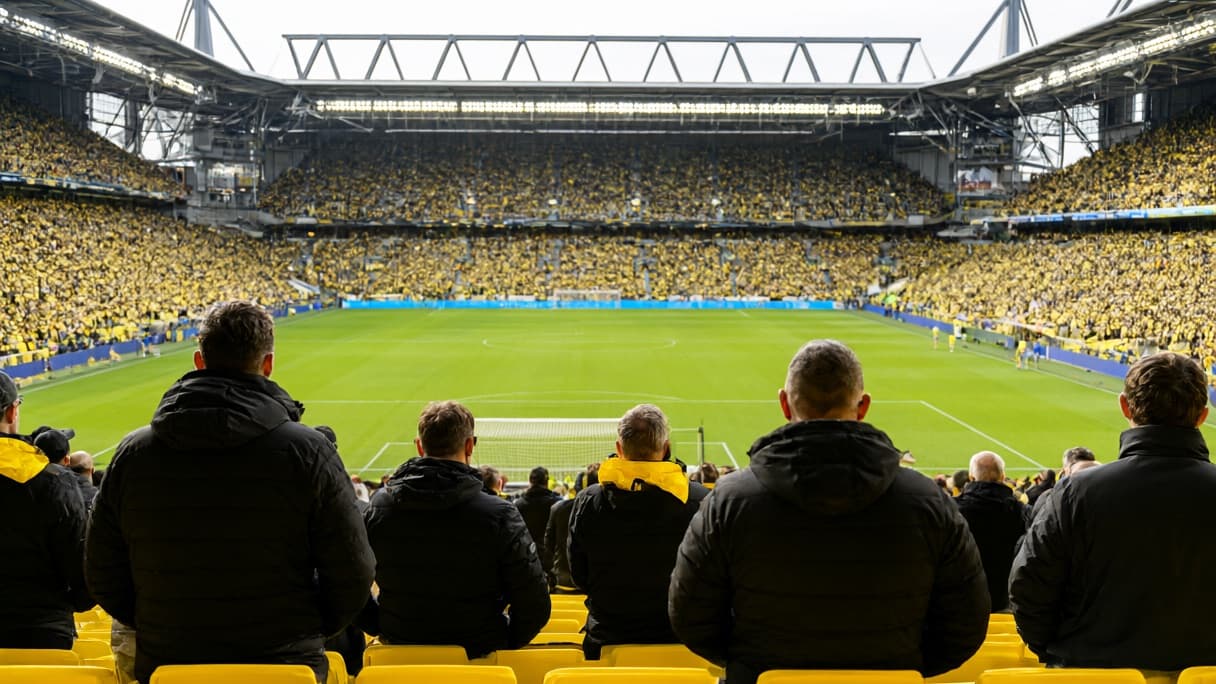
AI-generated image · US National Wire
Opinion: By bribing fans to put away their devices, Borussia Dortmund is attempting to manufacture a 'pure' experience that serves corporate interests more than the supporters.
The Yellow Wall at Signal Iduna Park is legendary for a reason. As first reported by The Guardian, the sight of 81,365 fans bellowing the last names of Borussia Dortmund’s starting lineup creates an atmosphere that is, by broad consensus, the best home support in Europe. But recently, the club attempted to engineer this organic passion through a rewards program that feels less like a plea for presence and more like a corporate purity test.
In a match against Eintracht Frankfurt, Dortmund incentivized fans to stay off their phones by offering signed jerseys and gift cards to the club’s merchandise store. To participate, supporters had to activate a "fan mode" on the club’s app—a term The Guardian describes as phenomenally passive-aggressive—which allowed the club to track how often users unlocked their devices. For every minute a fan remained disconnected, they earned points.
On the surface, this is framed as a noble effort to preserve the "here and now." Carsten Cramer, chief executive of Borussia Dortmund, claimed that the collective experience of over 81,000 people is "irreplaceable." Marcel de Groot, chief executive of Vodafone Germany—who serves as both a cellphone provider and a Dortmund sponsor—echoed this, urging fans to focus on the field rather than a screen.
But let's be clear: this is an attempt to commodify authenticity. By rewarding fans for behaving in a way that looks "pure" to the outside world, the club is attempting to curate the image of the Yellow Wall. It is a desperate move to sanitize the fan experience for the digital age, ensuring the "organic" folklore of global football remains a marketable product.
This trend isn't limited to Dortmund. The Guardian notes that second-division clubs Dynamo Dresden and Hertha Berlin have banned commercial influencer-style videos to protect the integrity of TV rights and the fan experience. Similar frictions are appearing in tennis; the US Open recently credentialed over 100 content creators, leading to disruptions so severe a chair umpire had to ask influencers to turn off a ring light. While Wimbledon has refused to credential influencers for these reasons, the underlying conflict remains the same: the clash between raw, unpredictable fandom and the desire for a controlled, monetizable spectacle.
When sports brands like Dortmund and Vodafone Germany dictate how a ticket-buyer should experience a match, they are treating fans not as active participants in a community, but as props in a corporate production. The irony is palpable. The club is using a proprietary app to monitor behavior in order to protect an "irreplaceable" moment of human connection.
If the goal is truly to stop "cultural content parasites," then banning commercial influencers is a logical step. But when a club begins bribing its own loyal supporters to put away their phones, it is no longer about the fans. It is about maintaining a specific, sanitized aesthetic of passion that can be sold to the world. The Yellow Wall should be defined by the fans, not by a rewards program designed by the front office.