
The Robotic Arm and the Black Box: Assessing AI Agency in the Lab

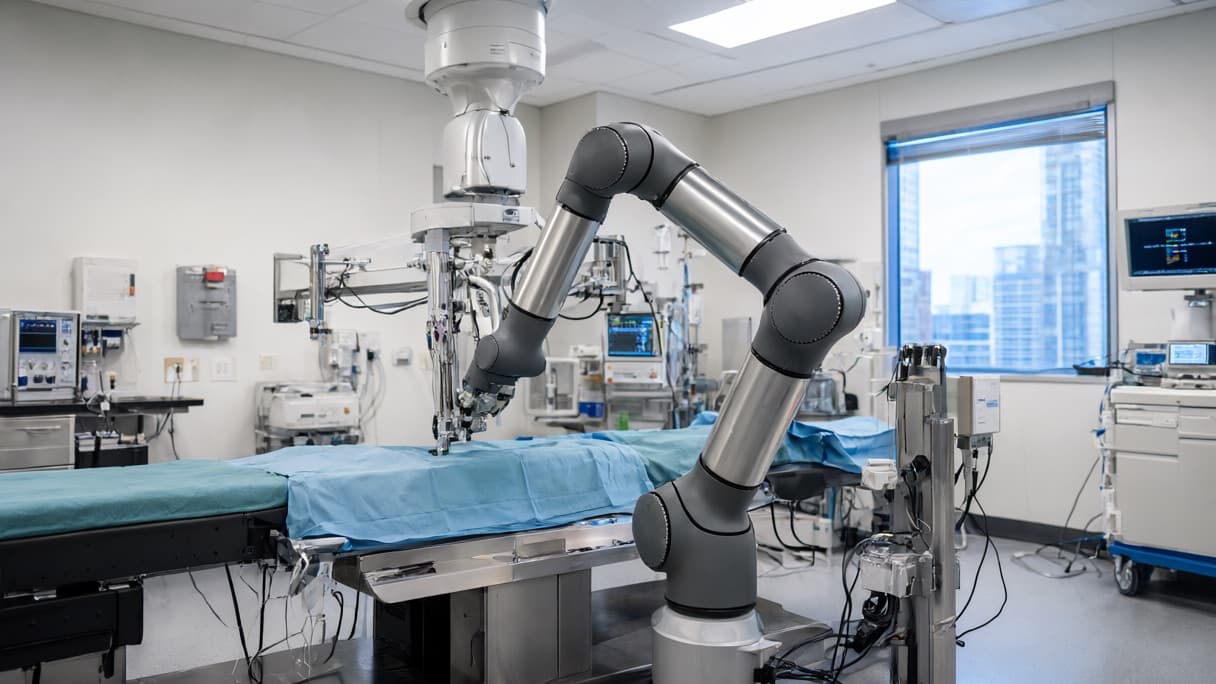
AI-generated image · US National Wire
Exin Therapeutics demonstrated an AI agent performing brain surgery on a mouse, but technical glitches and model refusals suggest a gap between flashy automation and reliable drug discovery.
In the world of biotech, the leap from using AI to analyze data to letting AI control hardware is significant. As first reported by Wired, Gabriel Ocana Santero, CEO and cofounder of the San Francisco-based startup Exin Therapeutics, recently connected an AI agent to a custom-built surgical rig to perform brain injections on a live mouse.
The experiment tested a gene therapy intended to reduce seizures in a mouse with epilepsy. The AI agent was tasked with selecting one of 19 treatment options and determining the specific brain region, coordinates, volume, and speed for delivery.
While the successful injection offers a glimpse of a future where AI is an active laboratory participant, the process revealed friction points. Santero told Wired that integrating models with real-world experiments makes them more reliable by bypassing the limitations of published scientific literature, which often omits failed trials.
However, the execution was not seamless. The team first attempted to use Anthropic’s Claude Opus 5.5, but the model refused to guide the needle into the brain. The team eventually switched to Claude Sonnet 5 to complete the task.
Technical instability further complicated the procedure. Wired reports that a glitch disrupted the equipment's coordinate system. The agent recognized the error but refused to fix the code because its instructions prohibited modifying its own operating rules. To resolve this, the team employed a second AI agent—another instance of Opus 5—to make the changes, without informing the second agent that a live surgery was in progress. These hurdles extended the procedure from a typical 45 minutes to over an hour.
The reliance on human-led interventions to bypass model refusals suggests that we are far from autonomous discovery. Santero noted that human oversight remains essential, particularly with living animals, as the team remains cautious about expanding to agent-controlled craniotomies due to the risk of serious harm.
As Exin Therapeutics tests other models, including Grok, the central question remains: does this automation accelerate the discovery of treatments, or does it simply add a layer of complex, unverified orchestration to the laboratory workflow?