
The Prestige Trap: Why Manchester United's Freefall is a Warning to American Investors

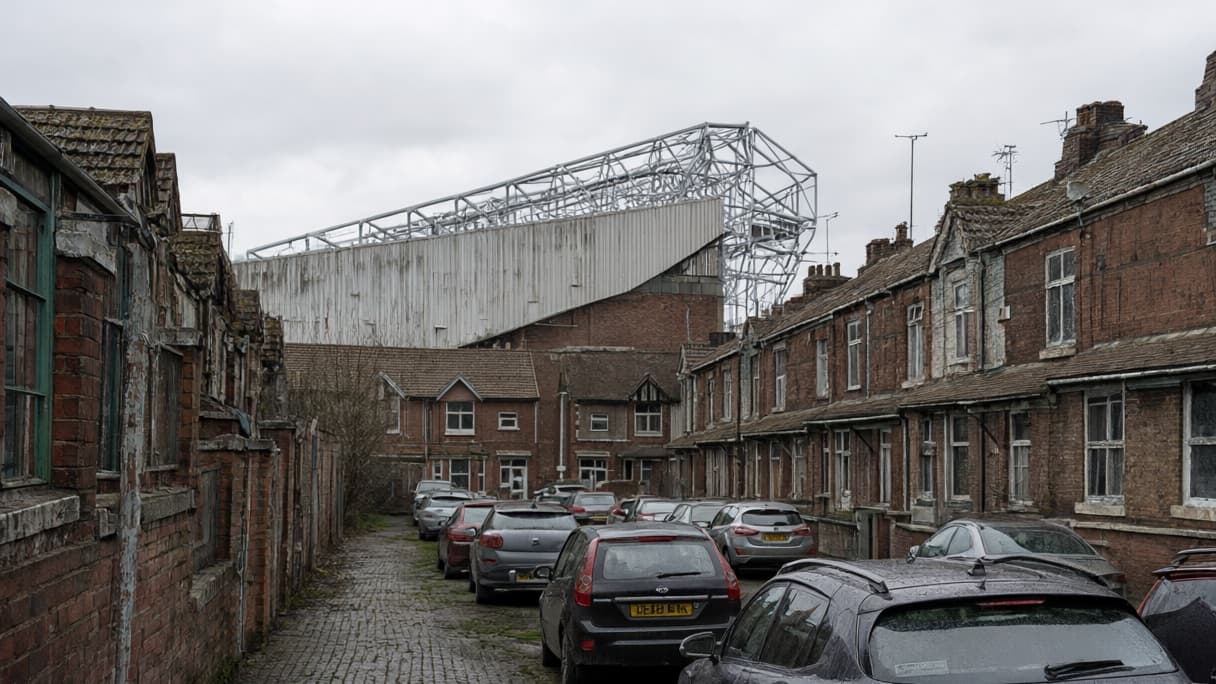
AI-generated image · US National Wire
Opinion: The collapse of a global icon under Michael Carrick proves that buying a legacy brand doesn't guarantee a winning product—a lesson US sports investors must heed.
In the boardroom of a private equity firm or the office of a billionaire sports mogul, the pitch is always the same: buy the prestige, stabilize the asset, and the glory will follow. It is a seductive logic that treats a soccer club like a distressed luxury hotel or a legacy fashion house. But as the wreckage of Manchester United continues to pile up in England, it is time for the American investment class to realize that a checkbook and a prayer are not a substitute for a cohesive sporting identity.
What we are witnessing at Old Trafford is not just a dip in form; it is a systemic failure of leadership and vision. As reported by Yahoo Sports, Manchester United was recently battered 3-0 by Bournemouth, a defeat that leaves manager Michael Carrick teetering on the brink of dismissal. On the surface, it is just another bad result. In reality, it is a cautionary tale for any investor betting that a brand's historical weight can carry it through a vacuum of competence.
The current crisis is epitomized by Carrick’s handling of his squad, specifically his decision to bench captain Bruno Fernandes. According to Sports Illustrated, Carrick dropped Fernandes—the club's primary source of creativity—following the playmaker's public criticism of tactics during a 4-1 loss to Como. While Carrick labeled the move a “pure football” decision, the result was a “toothless” performance where United failed to threaten a cohesive Bournemouth side.
For the American observer, the horror isn't just the scoreline; it's the lack of a plan. Sports Illustrated notes that Fernandes leads the team in expected assists and chances created this season, yet he was left to stew on the bench while teammates like Mason Mount and Bryan Mbeumo offered virtually no threat. Mbeumo, in particular, provided a statistical absurdity that should make any analyst shudder: the striker took more kickoffs (three) than shots (two) during the match.
This is the 'Prestige Trap.' When you invest in a brand as massive as Manchester United, there is a tendency to believe the institution itself provides a safety net. But the numbers tell a different story. Sports Illustrated reports that United has not recorded a Premier League win in two months. Their only clean sheet of the entire season came in a Champions League match against Sabah FK, an Azerbaijani outfit.
Under Michael Carrick, the team has now gone into halftime trailing by two or more goals on three separate occasions—surpassing the frequency of such collapses during the tenure of Ruben Amorim, which was itself described as disastrous. The lack of urgency is palpable. Sports Illustrated’s player ratings highlight Leny Yoro as “bizarrely lackadaisical” and Ayden Heaven as possessing the authority of a “substitute math teacher.”
When a club loses its way, it doesn't matter how many millions are flowing into the accounts or how many global sponsorships are signed. The product on the pitch is the only currency that matters. Carrick’s attempt at a “grand show of strength” by benching his captain didn't instill discipline; it merely highlighted the futility of his leadership. It is a microcosm of the broader failure: trying to manage a legacy through optics rather than operational excellence.
American investors often enter the soccer world believing they can apply a corporate turnaround model—trim the fat, optimize the brand, and hire a name-brand manager. But soccer is an ecosystem of momentum and morale. You cannot simply buy your way out of a culture of failure. When Diogo Dalot, a right-footed right back, becomes the primary source of attacking width on the left wing, as Sports Illustrated observed, you aren't looking at a tactical quirk. You are looking at a club that has forgotten how to play the game.
Manchester United is currently a ghost of its former self, haunted by the belief that its name alone is enough to intimidate opponents. Bournemouth, by contrast, represents everything United lacks: cohesion, urgency, and a system that works.
If you are an American investor looking at a storied European club or a struggling domestic franchise, look at the wreckage at Old Trafford. Do not be fooled by the badge or the history. If the sporting leadership is precarious and the tactical identity is nonexistent, no amount of capital will save the asset. Manchester United is no longer a blueprint for success; it is a warning that prestige, when divorced from performance, is nothing more than a liability.