
The Open-Source Law Firm: Assessing the Operational TCO of FOSS Stacks in Legal Practice

AI-generated image · US National Wire
While a 'free software' approach can eliminate proprietary licensing fees, the operational reality for high-compliance environments involves a shift in cost from vendor payments to technical maintenance and hardware management.
### The Shift from Licensing to Labor
In the enterprise software landscape, the allure of Free and Open Source Software (FOSS) is often framed as a cost-saving measure. However, for a legal practice, the transition from proprietary suites to a self-hosted stack represents a fundamental shift in Total Cost of Ownership (TCO). Rather than paying recurring licensing fees to a vendor, the operational burden shifts toward the internal management of the infrastructure.
As first reported by Hacker News, Neil Brown, who operates the English law firm decoded.legal, has spent five years running his practice on free software. His operational model illustrates a high-dependency relationship between software utility and the practitioner's own technical proficiency. For Brown, the ROI of this stack is realized through the use of terminal-based tools—such as vim, mutt, and ikhal—which he argues are easier to use and less distracting than GUI alternatives.
### Infrastructure and Security
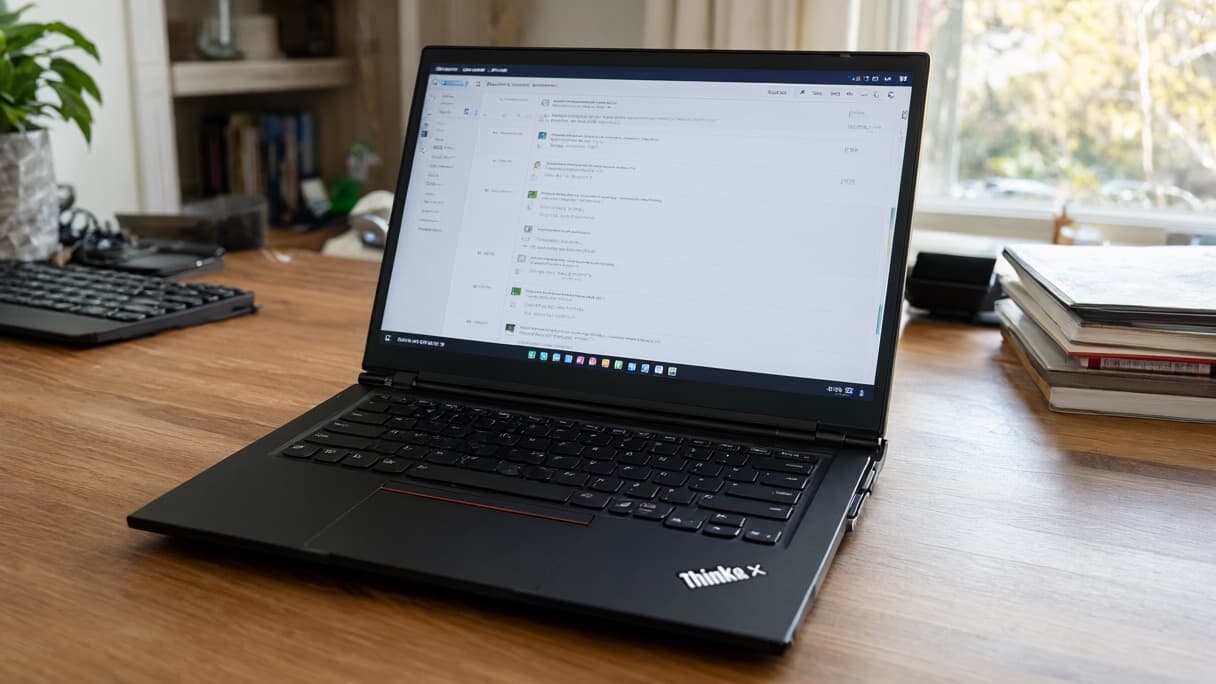
One of the primary operational risks in a FOSS-heavy environment is the reliance on commodity hardware. Brown reports that his server-side operations, excluding Signal, are self-hosted primarily using Intel NUCs and some Raspberry Pi devices. Brown notes a current hardware issue with the Thunderbolt/USB-C ports on his primary machine, a ThinkPad X1 Yoga Gen 6, which he describes as "flaky for data."
For high-compliance environments, security is critical. The FOSS stack utilized by decoded.legal incorporates several layers of encryption and monitoring:
* **Encryption:** Disk encryption via LUKS and client-side file encryption via Cryptomator, synchronized through Syncthing. * **Identity Management:** Bitwarden as a password manager, utilizing a vaultwarden server and YubiKeys. * **Network Security:** VPN capabilities managed through WireGuard, using PiVPN and trailofbit’s algo ansible scripts. * **Monitoring:** Uptime Kuma for monitoring and greenbone/OpenVAS for vulnerability scanning.
### Operational Friction and Tooling
Brown's experience highlights that FOSS stacks are rarely static. He previously utilized Nextcloud for file synchronization but migrated to a combination of Syncthing and radicale because Nextcloud was "causing me more problems than it solved." Similarly, he ceased running a Jitsi server for video conferencing, opting instead to join external Teams or Zoom meetings via Firefox or offering Signal as an alternative.
The firm's core productivity is maintained through a specialized set of tools: LibreOffice Writer for document exchange; pandoc and typst for converting Markdown files written in vim; EspoCRM for matter management; and InvoicePlane and Kimai for financial tracking.
### Opinion: The 'Technical Debt' Trade-off
*Opinion: In my view, the decoded.legal model is a masterclass in technical autonomy, but it is not a scalable blueprint for most mid-to-large enterprise legal firms. The TCO here is low only because the principal is a power user comfortable in a terminal. For a firm without a highly technical founder or a dedicated DevOps budget, the 'cost' of managing a self-hosted stack—including vulnerability scanning via OpenVAS and the manual configuration of WireGuard—would likely exceed the cost of a proprietary SaaS subscription. The operational risk is no longer 'vendor lock-in,' but 'talent lock-in,' where the entire firm's infrastructure depends on the specific technical knowledge of one individual.*