
The Medium-Lift Void: New Contenders Race to Fill the Falcon 9 Gap

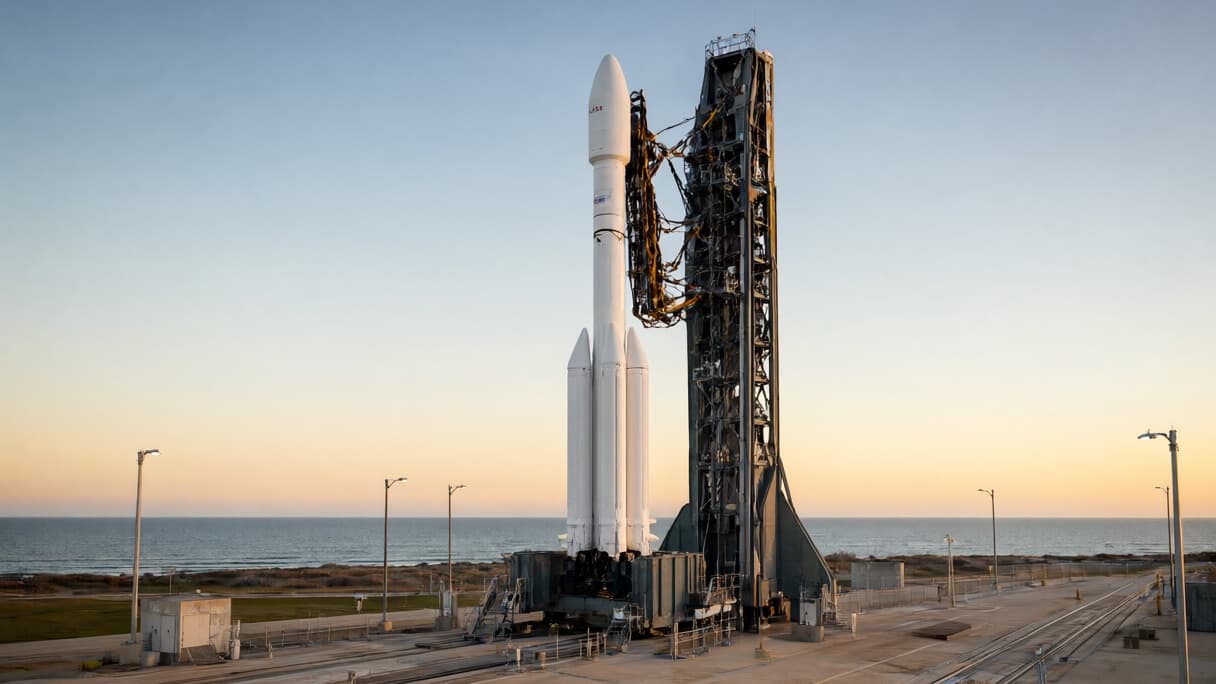
AI-generated image · US National Wire
As SpaceX prepares to pull the Falcon 9 from the commercial market, a new generation of U.S. rockets is fighting to secure the medium-lift sector.
The United States is facing a looming vacuum in medium-lift launch capacity—defined as vehicles capable of lifting 2 to 20 metric tons—as SpaceX plans to remove the Falcon 9 from the commercial market as early as 2028. As Ars Technica first reported, this shift has left satellite operators uncertain about booking launches for the 2027 to 2030 window, as larger vehicles like New Glenn and Vulcan are expensive for medium-sized payloads and already possess stacked manifests.
It has been 13 years since the debut of the Antares rocket, developed by Orbital Sciences Corporation, which Ars Technica notes was the last of its kind in the U.S. The Antares vehicle struggled with reliability, utilizing refurbished Soviet-era engines and a core stage manufactured in Ukraine; the rocket exploded during its fifth launch in 2014.
Four new domestic contenders are now attempting to scale up launch cadences, with a focus on in-house engine production to control costs. Among them is Stoke Space with its Nova rocket, which targets a capacity of 3 tons in reusable mode and 7 tons in expendable mode. Stoke's first stage is nearly complete at its Kent, Washington factory, and while the company targets an "early" 2027 launch, Ars Technica predicts a July 2027 debut.
Relativity Space is developing the Terran R, which the company claims can lift up to 33.5 metric tons in expendable mode, though Ars Technica notes that a reusable first stage likely brings that capacity closer to 20 metric tons. The Long Beach, California-based company was recently acquired by former Google CEO Eric Schmitt, who has provided critical funding. Relativity has completed acceptance testing for the 13 Aeon R engines powering the first stage and recently conducted the first integrated hot fire test of the second stage. Ars Technica predicts a September 2027 debut for Terran R.