
The High Stakes of the Holdout: Why a Lockout Could Be the Death Knell for the Yankees' Window

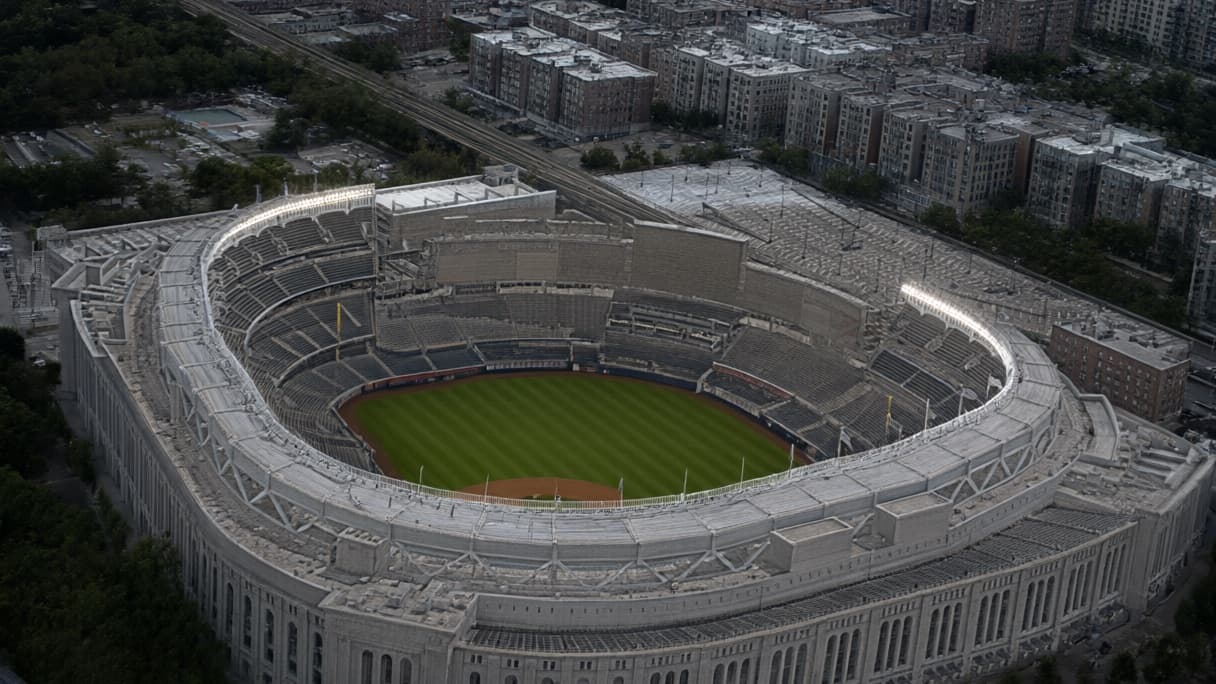
AI-generated image · US National Wire · Based on a photo by vtravelled.com (CC BY 2.0, Wikimedia Commons)
OPINION: By backing a salary cap and risking a lost season, Hal Steinbrenner is playing a dangerous game of chicken that threatens to leave the franchise's biggest stars ringless.
Listen, I've seen enough baseball to know that the game is always moving, but right now, the New York Yankees are standing still while the clock ticks toward a disaster. We are staring down the barrel of a lockout, and if you're wearing pinstripes, you should be terrified. This isn't just about a few missed games or a shortened spring; it's about the very identity of the Bronx Bombers and the legacy of the players currently wearing the uniform.
Let's be clear: this is my opinion, but as Sports Illustrated first reported, the math is staring us in the face. The Yankees are playing a dangerous game of chicken with the owners, and if this lockout hits, the window for this roster doesn't just close—it slams shut on their fingers.
According to reporting from Sports Illustrated, the current collective bargaining agreement (CBA) expires on December 1. Once that happens, the league enters a lockout until a new deal is struck. While the calendar offers a few brief windows for activity—November 3 for signings and trades, November 10 for GM meetings, and November 20 for the non-tender deadline—the reality is that negotiations between the league owners and the Major League Baseball Players Association (MLBPA) are at a complete standstill.
As Sports Illustrated reports, the owners are pushing hard for a salary cap, a move the MLBPA vehemently opposes. It's a dispute that has lasted since the 20th century, and the two sides have never been further apart.
Here is where the situation becomes absurd: Yankees owner Hal Steinbrenner isn't just a passenger in these negotiations; he is a driver. According to Sports Illustrated, Steinbrenner admitted during a press conference last week that he helped draft the initial CBA proposals for the owners, all of which call for a salary cap.
Now, let me tell you as a baseball lifer: this is madness. The Yankees' greatest historical advantage has always been their financial power. Until the Los Angeles Dodgers and New York Mets began to challenge them in recent years, the Yankees consistently sat atop the league in player payroll. This season, the franchise reached a peak, spending over $300 million to build the 2026 roster, the highest payroll in franchise history.
Steinbrenner argues that a team doesn't need that kind of money to win. He might be technically correct, but he's ignoring the reason why that $300 million didn't result in a trophy. As Sports Illustrated points out, owner Hal Steinbrenner and general manager Brian Cashman have spread that money with extreme inefficiency. They've paid the wrong players—think Jacoby Ellsbury, Aroldis Chapman, Aaron Hicks, and DJ LeMahieu—while passing on clear free-agent fits like Juan Soto, Bryce Harper, Manny Machado, Corey Seager, and Yoshinobu Yamamoto. Furthermore, they limited their own flexibility by swallowing the bulk of the contracts for players acquired via trade, specifically Giancarlo Stanton, Josh Donaldson, and Ryan McMahon.
If the Yankees can't win with unlimited resources because of poor management, why on earth would Steinbrenner want to impose a hard limit on those resources? If a salary cap is implemented, the Yankees will be forced to spend a couple of years lowering their payroll. That means they can't be active in free agency and can't re-sign the talent they want to keep. It creates new holes in a roster that is already leaking. And given Brian Cashman's track record of failed prospects and bad trades, trusting him to fix the team without the safety net of free agency is a recipe for failure.
But the payroll issue is only half the nightmare. The real tragedy is the clock. The 2026 season was the imperative moment for the Yankees to win the World Series, and they didn't even come close. Now, the core of this team is aging out.
Sports Illustrated notes that Aaron Judge is entering the fifth year of his nine-year contract and will be 34. Gerrit Cole is 36. Giancarlo Stanton is set to turn 37 in two weeks. Yes, we have young talent emerging in the likes of George Lombard Jr., Cam Schlittler, and Ben Rice, but you don't build a championship legacy on 'emerging' talent alone when you have Hall of Fame-caliber players in their prime.
If the lockout continues, the 2027 season is almost certainly going to be shortened. In the worst-case scenario—the 'doomsday' scenario similar to the 2004-05 NHL season—the entire year is wiped out. If that happens, Judge loses a precious year of his prime, and Cole and Stanton move one step closer to retirement.
None of these three have won a World Series. To let a lockout rob them of the 2027 campaign is more than just a business disagreement; it is an inexcusable waste of three potential Hall of Fame careers.
Hal Steinbrenner is betting that a salary cap is the future of the game. But in chasing that goal, he is risking the only thing that actually matters in the Bronx: winning. If the Yankees can't maximize their financial power to win now, and then they voluntarily surrender that power through a cap—all while potentially losing an entire season to a lockout—they aren't just playing a game of chicken. They are driving straight into a wall.