
The Efficiency Gap: Why Game 1 Will Be Won in the Trenches

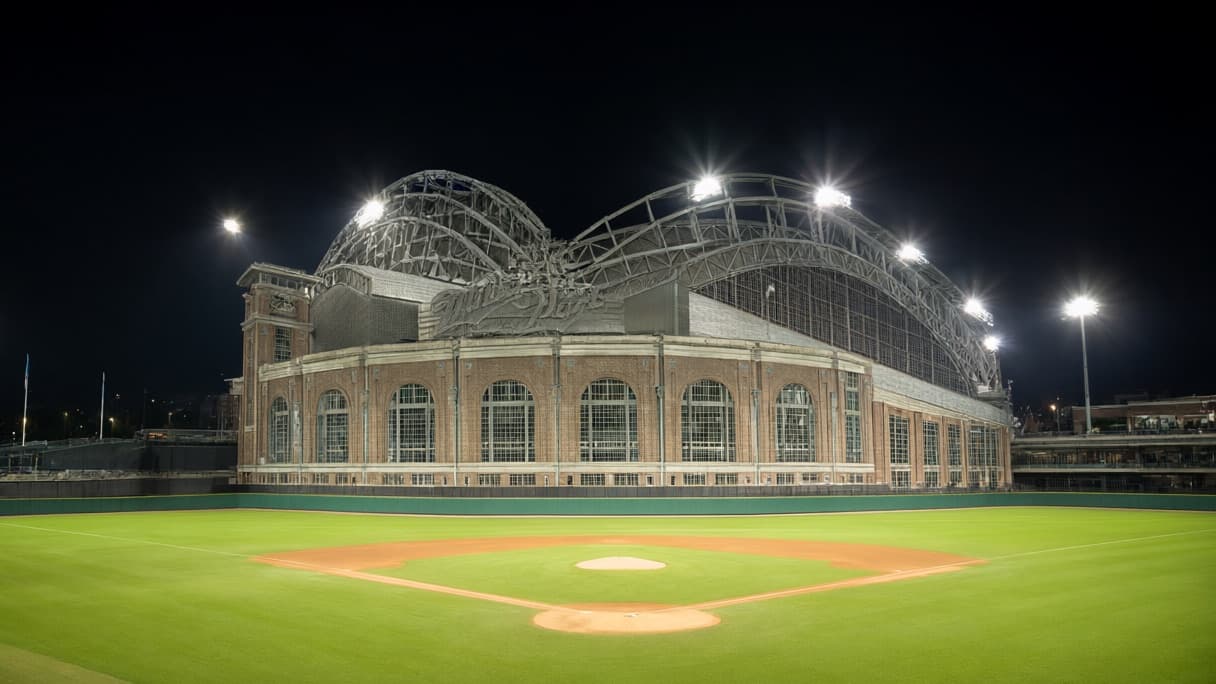
AI-generated image · US National Wire
While the World Series hype focuses on the 'small ball' clash of the Brewers and Rays, the real battle is the delta between Milwaukee's fading ace and Tampa Bay's contact-heavy approach.
The 2026 World Series is being marketed as a celebration of the 'small'—small markets, small payrolls, and a small-ball style of play. According to CBS Sports, the Milwaukee Brewers and Tampa Bay Rays enter this series with the highest combined payroll rank (47) in World Series history and the smallest combined television market since 1985. On paper, it is a mirror image: both lineups rank first and second in the league in batting average, while simultaneously ranking last and second-to-last in launch angle.
However, the outcome of Game 1 on Friday night at American Family Field will likely be decided by a specific mechanical delta: the ability of the Rays to extend at-bats against a Milwaukee starter who has lost his postseason rhythm.
**Opinion: The 'Miz' Factor** While 24-year-old Jacob Misiorowski enters the game as the presumed NL Cy Young winner with a regular-season 1.80 ERA, his recent performance suggests a vulnerability that Tampa Bay is perfectly positioned to exploit. Misiorowski has struggled with length in the playoffs, failing to exit the fifth inning in both of his postseason starts. According to reporting from CBS Sports, he has surrendered three runs on nine hits over 8 1/3 innings, and his velocity has dipped from his 105 mph peak.
This creates a dangerous intersection with the Rays' offensive identity. Doug "Prop Bet Guy" Kralstein told SportsLine that the Rays do not swing and miss often and have been more effective at grinding out at-bats in the postseason than they were during the regular season. This is a trend Misiorowski has already felt; MLB.com reports that in his NLDS start, the Padres fouled off 30 pitches in the first four innings, and in the NLCS, the Dodgers produced foul balls on half of their swings (21 of 42). If the Rays replicate this high-contact, low-whiff approach, Misiorowski's efficiency will crater, forcing the Brewers into their bullpen earlier than desired.
**The Starter Shift** Adding to the volatility is a surprise move by the Rays. As reported by MLB.com, Tampa Bay will start Nick Martinez in Game 1 rather than ace Drew Rasmussen. While Rasmussen was available on four days' rest, the Rays opted to give him an extra day of rest for Game 2. Martinez, a first-time All-Star, brings a steady presence to the mound; CBS Sports notes that Martinez "lives in the strike zone," and MLB.com reports that the Rays have posted a 24-9 record in games started by Martinez this year, counting the playoffs.
With the Rays prioritizing contact and the Brewers relying on a fireballer who is currently struggling to find his efficiency, Game 1 becomes a test of endurance. If the Rays can force Misiorowski into the same high-pitch-count, low-outage traps that the Padres and Dodgers created, the momentum will shift toward Tampa Bay regardless of the Brewers' status as slight money line favorites (-189).