
The Commute is the New Storefront: Why Google's In-Car AI is a Retail Game-Changer

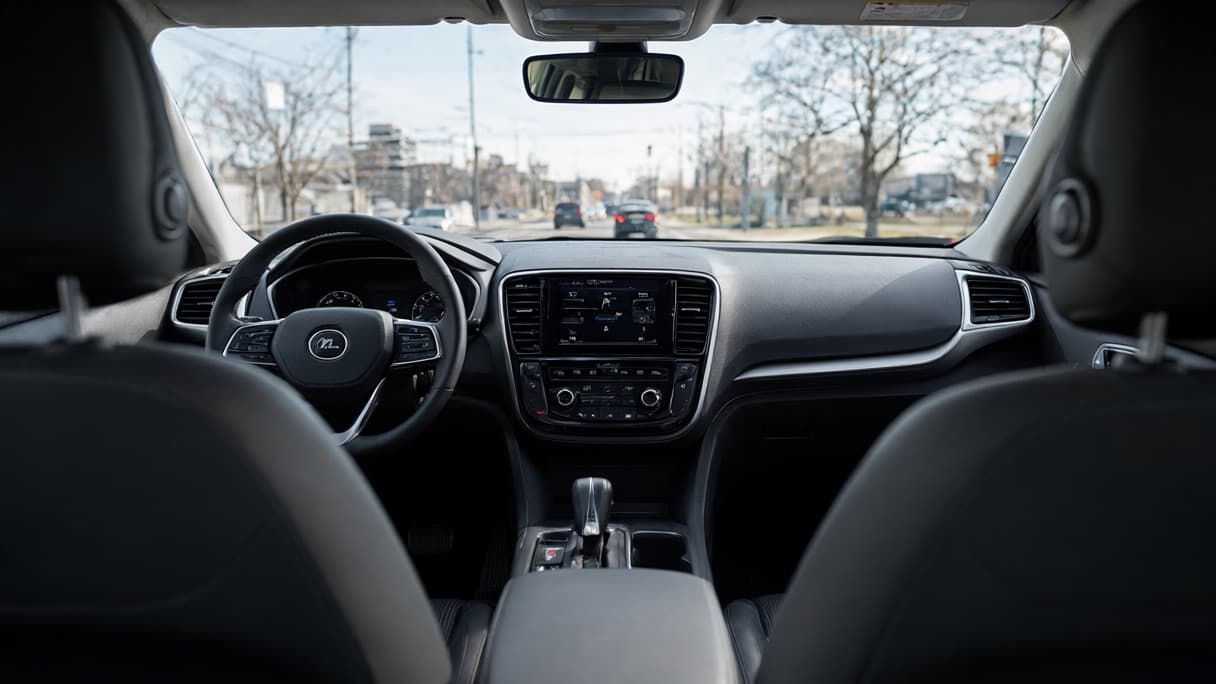
AI-generated image · US National Wire · Based on a photo by Google (CC BY 2.5, Wikimedia Commons)
Opinion: By integrating personal data into the driver's seat, Google is transforming the vehicle into a high-conversion touchpoint for seamless omnichannel commerce.
For years, the 'last mile' has been the obsession of retail operators. But as I look at the latest moves from Google, it is clear that the real frontier for omnichannel conversion isn't the delivery truck—it's the driver's seat.
Google is currently rolling out a "Personal Intelligence" feature for its Gemini AI assistant in vehicles, according to reporting from The Verge and TechCrunch. This isn't just another voice command update; it is a fundamental shift in how consumer data is activated in real-time. By allowing Gemini to draw from a user's Gmail, Calendar, Maps, Photos, YouTube, and Search history, Google is effectively turning the daily commute into a hyper-personalized concierge service.
From an operator's perspective, this is the holy grail of seamless commerce. When an AI can "connect the dots" across a user's digital life—as TechCrunch puts it—the vehicle stops being a bubble of isolation and becomes a high-conversion touchpoint.
Consider the implications of the examples provided by Google. The Verge reports that a user can ask Gemini to find a specific car wash based on a photo they took the previous week and navigate there immediately. For a retail or service provider, this is the ultimate frictionless journey. The gap between "I remember seeing that" (the discovery phase) and "I am going there now" (the conversion phase) has been reduced to a single natural language request.
Furthermore, TechCrunch notes that Gemini can now handle complex, multi-part requests using natural language. While the provided examples focus on flight statuses and gate numbers, the architectural capability is what matters to commerce. If an AI knows my calendar, my search history, and my emails, it knows my intent before I even start the engine. We are moving toward a world where the car doesn't just take you to a destination; it anticipates the commercial needs of that destination.
This integration is scaling rapidly. The Verge notes that several carmakers—including Volvo, Polestar, Nissan, Honda, GM, and Ford—have already shipped vehicles with "Google built-in," which supports native Android apps. With Personal Intelligence launching today for Android Auto and coming to Google built-in vehicles in the coming months, the infrastructure for this commerce shift is already in millions of cars, trucks, and SUVs, per TechCrunch.
Of course, this level of "emmeshing," as TechCrunch describes it, raises valid privacy concerns. Google has stated that users must opt-in to Personal Intelligence and can selectively choose which apps to connect. From a brand perspective, this means the value proposition must be high enough to justify the data exchange. The reward for the consumer is a frictionless life; the reward for the retailer is a customer who arrives at their door with a pre-validated intent to buy.
In my view, the commute is no longer dead time. It is the final frontier of the omnichannel experience. When the AI in your dashboard knows your preferences and past experiences as well as your best sales associate does, the vehicle becomes the most powerful conversion tool in the retail tech stack.