
The Black-Box Breach: Why Municipalities are Purging Flock Surveillance

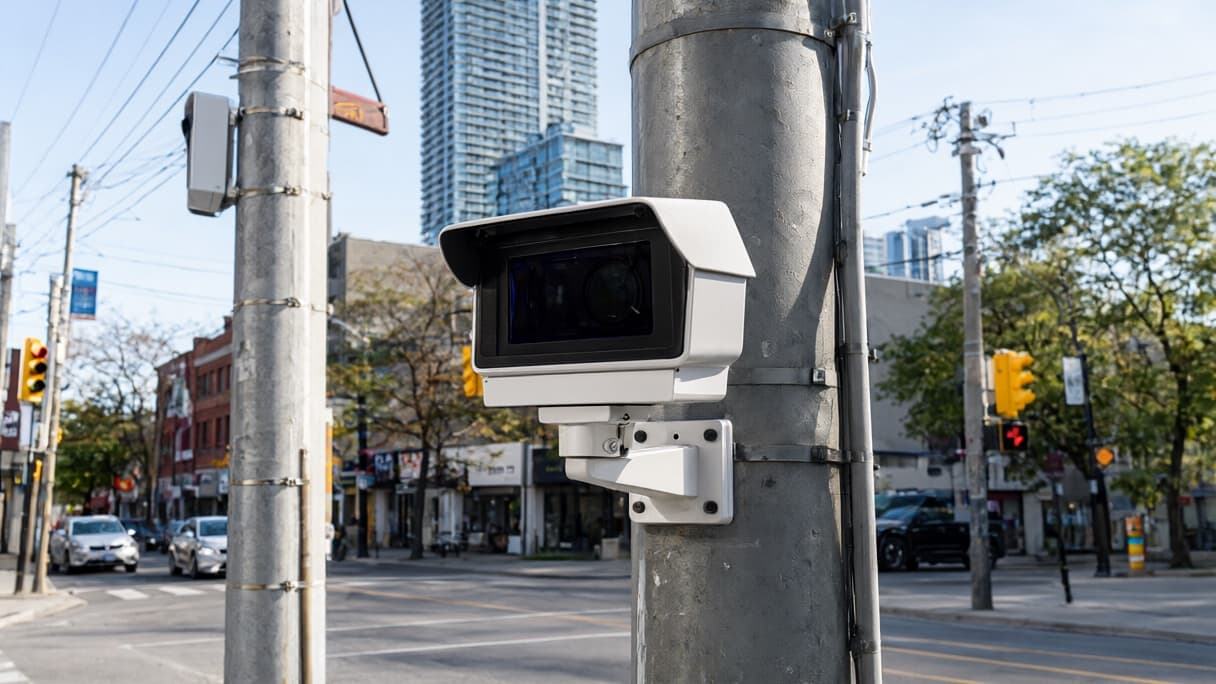
AI-generated image · US National Wire
A growing exodus of local governments from Flock Safety reveals a systemic failure in procurement oversight and a deepening distrust of outsourced law enforcement telemetry.
### Opinion: The Illusion of Control
As a cybersecurity analyst, I view the current retreat from Flock Safety—as first reported by TechCrunch—not as a sudden pivot toward privacy, but as a long-overdue recognition of a fundamental security failure: the outsourcing of municipal law enforcement to a black-box surveillance apparatus. For years, cities have traded oversight for convenience, deploying a network of sensors with zero transparency regarding where the telemetry ends up or who is actually querying the database. When we treat surveillance as a plug-and-play utility, we aren't just compromising privacy; we are creating a systemic vulnerability where the tools of public safety can be weaponized by the very people sworn to protect us, or accessed by federal agencies without local authorization.
***
### The Great Uninstallation
According to reporting from TechCrunch, a significant wave of local governments and police departments has moved since this summer to restrict, curb, or entirely terminate their contracts with Flock Safety. Several jurisdictions have already moved to end their agreements, including Monroe, Ohio; Newburgh, New York; Richmond, Virginia; Hopkinton, Massachusetts; New Bedford, Massachusetts; and Lansing, Michigan. Additionally, police in Grafton and East Bridgewater, Massachusetts, announced plans to cease use of the technology.
Public resistance has also manifested in direct democratic action. TechCrunch reports that residents of League City, Texas, recently voted against the continued use of Flock's license plate readers, leading to the removal of the cameras. Other notable exits include the El Paso County Sheriff’s Office in Colorado, which announced its departure in September, and Asheville, North Carolina, where the city voted to terminate its contract in August. In a press release cited by TechCrunch, El Paso County Sheriff Joseph Roybal stated that the county possesses the training and tools to apprehend criminals without relying on Flock.
### The Procurement Gap and the 'Invisible' Rollout
One of the most alarming aspects of the Flock deployment is the lack of transparency during the procurement phase. Adam Schwartz of the Electronic Frontier Foundation (EFF) told TechCrunch that many cities adopted the technology just a few years ago without the knowledge of their residents. Schwartz notes that police departments frequently make the decision to implement Flock independently, bypassing city council oversight.
This lack of transparency was evident in South Windsor, Connecticut, where local reports indicate Flock cameras went live last year without a public vote or warning. The town subsequently voted to remove the cameras in October. Schwartz explains that grassroots activists have been pushing city councils to use their procurement power to refuse payment for automatic license plate readers (ALPRs), and that many councils are now responding.
### Telemetry Misuse and Federal Overreach
The danger of a centralized surveillance database is not theoretical; it is a proven vulnerability. TechCrunch highlights two specific instances of officer misconduct involving the technology: in August, an officer in Brentwood, Missouri, faced accusations of using Flock cameras to stalk his ex-wife while they were undergoing divorce proceedings. In September, a prison sentence was handed down to an officer from East Texas who used the system to stalk his ex-girlfriend and her family.
Beyond individual bad actors, there is the issue of unauthorized data access by federal entities. In March, the city of Ithaca, New York, passed a resolution to end its contract with the Flock Group. The city's resolution explicitly cited "proven instances" of Flock infrastructure being used by federal agents without specific authorization from the local government. The city further alleged that Flock, through negligence or intent, allowed the Bureau of Alcohol, Tobacco, Firearms and Explosives (ATF) and U.S. Immigration and Customs Enforcement (ICE) to use query results from state and local ALPR data to investigate and persecute immigrants.