
The AI Miracle Bet: Big Tech's Reckless Spending Hits a Wall of Fiscal Reality

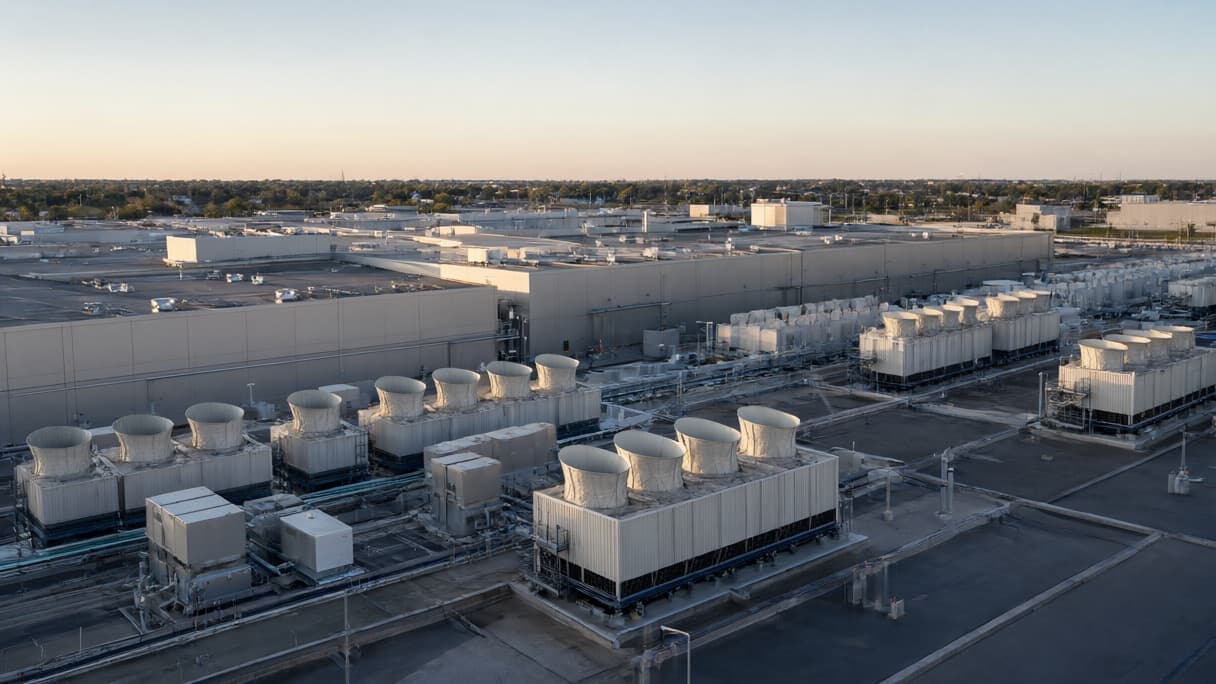
AI-generated image · US National Wire
As Alphabet, Amazon, Meta, and Microsoft pour hundreds of billions into infrastructure, investors are starting to ask if the returns will ever justify the staggering debt and negative cash flow.
### Opinion: The Reckoning of the AI Gold Rush
For years, the Silicon Valley playbook has been simple: spend whatever it takes to dominate the next frontier. But as we enter the fourth quarter of 2026, the 'growth at any cost' mentality is colliding with a cold, hard fiscal reality. As TechCrunch first reported, the Big Tech giants are no longer just investing in the future; they are betting the house on an AI miracle, and the cracks are beginning to show.
We are witnessing a dangerous cycle where companies are spending billions to build technology that may actively cannibalize their own primary revenue streams. It is a high-stakes gamble that assumes the efficiency of AI will somehow offset the destruction of the legacy business models that funded the boom in the first place. Wall Street is finally waking up to the fact that confidence is not a substitute for cash flow.
***
### The Capital Expenditure Explosion
According to reporting from TechCrunch, the scale of current AI infrastructure spending is staggering. In the past fortnight, Microsoft, Meta, Amazon, and Alphabet have outlined plans to allocate over $740 billion toward capital expenditures (capex) this year. This spending is primarily directed toward the chips and data centers required to power generative AI.
While investors previously viewed these massive outlays as a bullish signal of growth, TechCrunch reports that the mood has shifted toward anxiety. Concerns are mounting over rising debt, the potential for negative free cash flow, and the fundamental question of whether these investments will ever generate sufficient returns.
This market volatility manifested sharply on Friday, as reported by TechCrunch. The Nasdaq dropped 2.9%, and the chip sector suffered significant losses: Qualcomm fell 11%, Broadcom dropped more than 5%, and Nvidia declined 4%.
### The Cash Flow Crisis
For many of these giants, the AI race is draining the coffers that were once overflowing from their core businesses. TechCrunch highlights several alarming financial trends:
* **Alphabet:** Google's parent company is facing a precarious situation. TechCrunch reports that Alphabet saw its free cash flow dip into the red by $9.1 billion during the third quarter, marking the second straight quarter of negative cash flow. This comes despite quarterly capex rising to $51.4 billion. Alphabet expects its total spending for the year to reach up to $205 billion, with costs expected to climb further in 2027. More concerning is the impact on its core engine; Google's Search advertising business—which accounts for roughly half of its revenue—saw growth slow to 12%, the weakest pace in five quarters, as the AI-powered chatbot feature, AI Mode, integrates into Search. * **Amazon:** The company is seeing a massive swing in its liquidity. TechCrunch reports that Amazon recorded negative free cash flow of $42.4 billion over the last 12 months, a sharp reversal from the $14.8 billion in positive free cash flow it saw the previous year. The company anticipates capex spending of $220 billion this year. Despite a 39% growth in revenue for its AWS cloud business, Amazon's stock fell 7% following its Thursday earnings report. * **Meta:** The social media giant is also burning through cash. TechCrunch reports that Meta's capex has outpaced its operating cash, resulting in a $2.1 billion deficit in free cash flow for the third quarter. Meta is guiding toward as much as $145 billion in capex for the year. CEO Mark Zuckerberg has noted that the company's new free personal AI agent, Muse, is "very compute-intensive to run," making it a significant financial drain. Even with a 26% growth in ad revenue, Meta's stock dropped 10% last week. * **Microsoft:** Microsoft stands as the lone exception regarding cash flow, reporting $18.6 billion in positive free cash flow in its most recent quarter. TechCrunch notes that Microsoft's capex sat at $45.2 billion, which was lower than its $50 billion projection. However, Microsoft clarified that this was not a strategic pullback but rather the result of capacity delays from third-party providers.
### Funding the Boom Through Debt
One of the most alarming aspects of this spending spree is that it is not being funded solely by corporate profits. Using data from S&P Global Market Intelligence, TechCrunch reports that a combined $326 billion in debt was raised in 2026 by Oracle, Meta, Amazon, Alphabet, and Microsoft. This figure is triple the amount of debt these companies raised in the previous year.
### The Ripple Effect: Anthropic and the IPO Market
The instability of the AI infrastructure market is extending beyond the hyperscalers. TechCrunch reports that the AI company Anthropic has filed to go public, but its IPO could be complicated by these shifting financial tides. Because Anthropic requires massive amounts of compute to grow, it is heavily dependent on third parties.
Furthermore, TechCrunch reports that the Financial Times shared a warning from Blackstone, which told investors that Anthropic might not qualify for an investment-grade credit rating following its IPO. This would leave the company increasingly reliant on third-party providers and hyperscalers to fund its infrastructure needs.