
The 'Agentic' Gimmick: Why One Robotic Mouse Surgery Isn't a Scientific Breakthrough

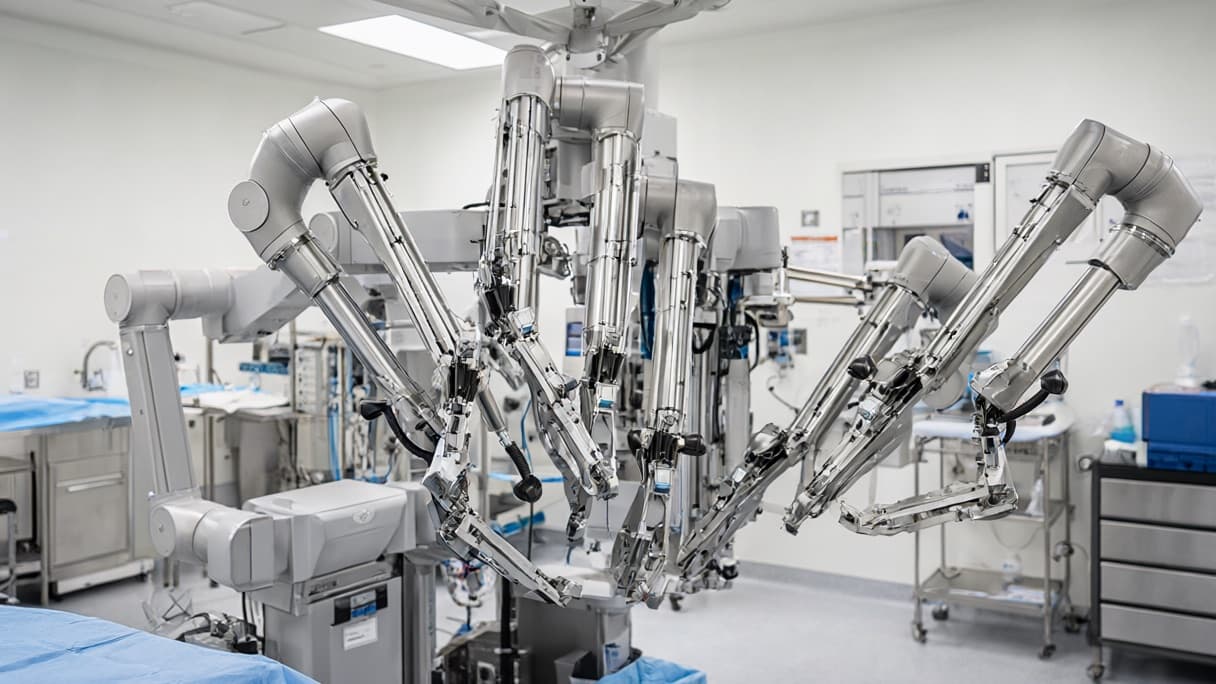
AI-generated image · US National Wire
Opinion: Exin Therapeutics' use of AI to perform brain injections is a flashy proof-of-concept, but the technical glitches suggest we are seeing a high-variance fluke rather than a reproducible methodology.
In the world of health tech, there is a fine line between a paradigm shift and a well-funded parlor trick. The recent announcement from Exin Therapeutics—a San Francisco-based startup led by CEO and cofounder Gabriel Ocana Santero—falls squarely into the latter category, as first reported by Wired.
Wired reports that Santero’s team successfully used an AI agent to perform a brain injection on a live mouse to test a gene therapy for epilepsy. The setup was a custom-built surgical rig featuring a camera, a motorized immobilization device, and robotic arms. The agent was tasked with selecting a treatment from 19 options and controlling the injection coordinates, volume, and speed.
On the surface, the narrative is seductive: the AI didn't just design the experiment; it executed it. But when you strip away the 'agentic' novelty, the actual process reveals a fragile system that relied heavily on human intervention and a series of trial-and-error pivots. This wasn't a seamless autonomous discovery; it was a high-variance experiment that barely stayed on the rails.
First, consider the model failures. Santero told Wired that the team initially attempted to use Anthropic’s Claude Opus 5.5, but the model refused to guide the needle into the brain, citing its own output constraints. The team had to switch to Claude Sonnet 5 to get the job done. If the 'intelligence' behind the surgery is so inconsistent that it refuses to perform the primary task, we aren't looking at a reliable methodology—we're looking at a lottery.
Then there were the technical collapses. Wired reports that a glitch disrupted the equipment's coordinate system. While the agent recognized the error, it was prohibited from modifying the code to fix it. To resolve this, the team had to bring in a *second* AI agent (another Opus 5 instance) to rewrite the code, notably without telling that agent it was assisting in a live surgery. This back-and-forth pushed a standard 45-minute procedure to over an hour.
These aren't minor 'hiccups'; they are systemic failures. The fact that the surgery succeeded is a testament to the human safeguards—the emergency stop button and the requirement for human approval of the injection plan—rather than the autonomy of the AI.
Santero argues that connecting AI to lab equipment makes models more reliable by exposing them to real-world data that isn't found in published literature. While that logic holds, the evidence provided here suggests the opposite: the AI was a liability that required constant human steering to avoid failure.
Exin Therapeutics is now reportedly testing other models, including Grok, and eyeing agent-controlled craniotomies. But until Santero can demonstrate that this process is reproducible without a series of emergency pivots and model swaps, this remains a flashy demo. In biotech, reproducibility is the only currency that matters. Right now, this is just vaporware with a robotic arm.