
Bipartisan Betting: How the Democratic Sweep Reshapes Sports Gambling and Stadium Subsidies

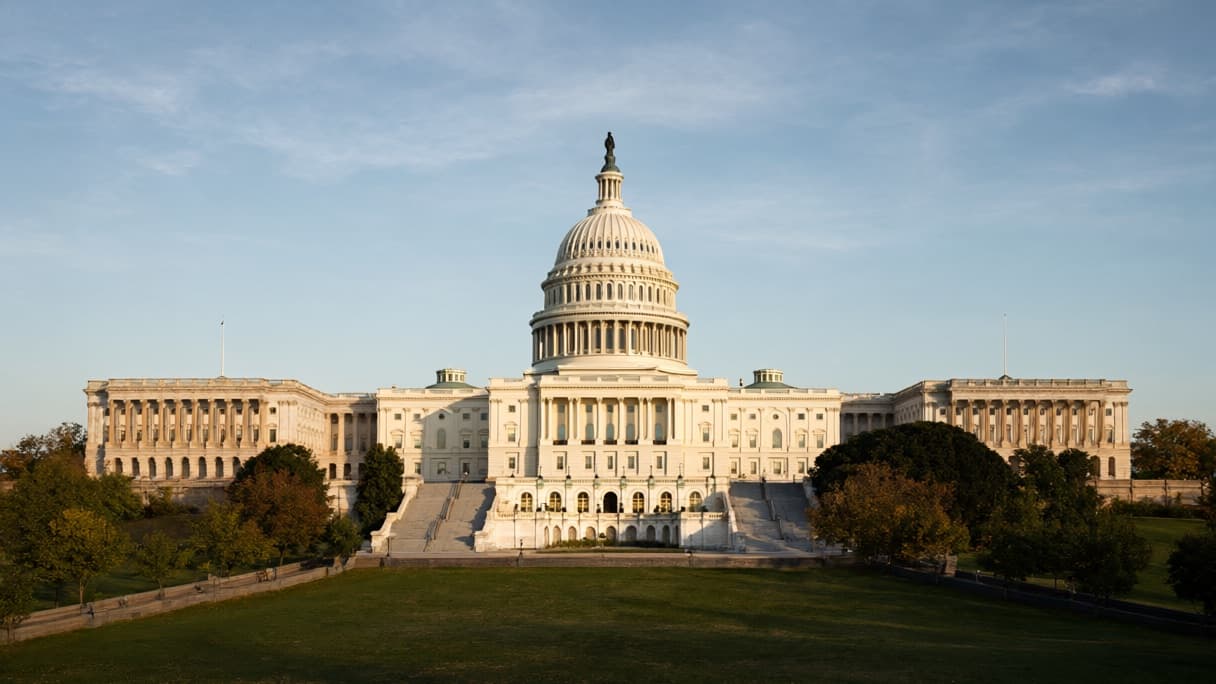
AI-generated image · US National Wire
Despite heavy Republican investment from sports owners, the shift in Washington power reveals a bipartisan appetite for gambling revenue and public stadium funding.
The recent Democratic sweep of both chambers of Congress marks a significant shift in Washington's balance of power, yet the impact on the sports betting industry and stadium subsidies may be more nuanced than the election spending suggests, as The Guardian first reported.
According to reporting from The Guardian, professional sports owners invested more than $100 million into this election cycle, with a strong preference for Republican candidates. Notable contributions included $67 million from former Mavericks owner Miriam Adelson to Republican committees, and $1.25 million from Dallas Cowboys owner Jerry Jones, who split his donations between a super PAC for Donald Trump ($1 million) and a committee supporting Ken Paxton ($250,000). Other owners backed candidates such as Mike Rogers in Michigan.
However, the regulatory landscape for sports betting has historically been supported by Democrats. The Guardian notes that New Jersey Governor Phil Murphy placed the state's first legal sports bet in 2018, and Illinois Governor JB Pritzker signed sports betting into law in 2019. Additionally, New York Governor Kathy Hochul oversaw the launch of mobile sportsbooks in 2022, a system where the state claims 51% of the revenue.
This bipartisan support is particularly evident in the current conflict over prediction markets. The NFL has argued before the U.S. Supreme Court that prediction markets are gambling and should be subject to state regulation, similar to traditional sportsbooks. This is a critical distinction, as the Commodity Futures Trading Commission (CFTC)—an agency under the Trump administration—has sued at least nine states to prevent them from applying gambling laws to these markets. Furthermore, Donald Trump Jr. serves as an advisor to Kalshi, a prediction market platform.
With Democrats now controlling the confirmation of future CFTC commissioners and having authored the majority of prediction-market legislation in the current Congress, the regulatory tug-of-war is shifting. The Guardian characterizes this as a turf war between established licensed bookmakers and new entrants.
Regarding stadium-related tax subsidies, the shift in power does not appear to threaten the flow of public funds to sports owners. The Guardian highlights that Democratic leaders continue to back these deals. Governor Kathy Hochul supported public funding for the Buffalo Bills' stadium, and Governor JB Pritzker is seeking a legislative vote during the November and December veto sessions to address the Chicago Bears' request for taxpayer assistance for a new stadium.
Even at the federal level, the intersection of politics and sports infrastructure remains complex. The Guardian reports that Donald Trump previously threatened to block a $3.8 billion deal for the Commanders' RFK Stadium unless the team reverted to its former nickname, while simultaneously attempting to secure his own name on the building. In my view, these dynamics suggest that while the political party in power changes, the underlying mechanism of transferring public funds to billionaire owners remains a bipartisan constant.