
Axial Flux Ambitions: Does the Mercedes-AMG GT 4-Door Coupe Actually Drive, or is it Just a Fast Tablet?

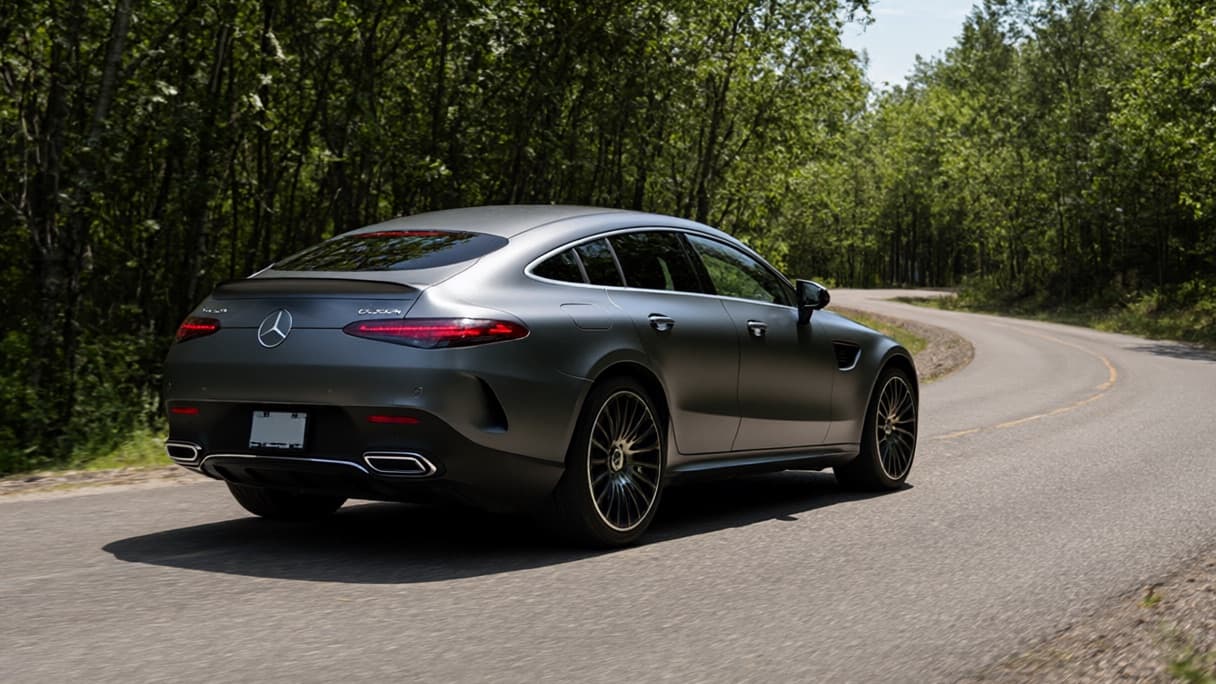
AI-generated image · US National Wire
Opinion: Mercedes is betting on Yasa-built axial flux motors to save the driver's experience from the 'battery-weight tax,' and for once, the tech might actually be serving the driver.
Let's be honest: I don't care about the spec sheet. In the current EV landscape, raw numbers are often meaningless. We've entered an era of 'heavy iPads on wheels'—cars that warp space-time in a straight line but feel like steering a luxury apartment through a cornfield in the corners.
When I look at the Mercedes-AMG GT 4-Door Coupe, my skepticism is dialed to ten. However, as Roberto Baldwin first reported for Ars Technica, Mercedes may have actually built a driver's machine. Baldwin notes that the company has mostly reduced the 'battery-weight tax' that typically mires EV performance, resulting in a vehicle that feels firmly planted on both the street and the track.
The secret is the implementation of three axial flux motors produced by Yasa, a company Mercedes acquired in 2021. These motors are significantly smaller and lighter than traditional units—two in the back are only 3.1 inches wide and one in the front is 3.5 inches. This allows the AMG.EA sports-car architecture to better manage the vehicle's mass.
The real test, however, is control. Mercedes includes the AMG race engineer control system (standard on the 63 trim, optional on the 55), featuring Response, Agility, and Traction dials. Ars Technica reports that dialing these to seven loosens the rear end and increases throttle response enough to easily break traction—the opposite of a synthetic 'iPad' experience.
Even with high-tech interventions like steering that reaches six degrees at the rear axle and Active Ride Control suspension, the car feels visceral. In the GT 63, the Yasa motors can push a peak of 1,153 hp during a 63-second 'Boost mode,' with a 0-60 mph sprint of roughly 2.3 seconds.
By leveraging axial flux motors to reduce the powertrain's footprint and giving the driver analog-style control via the race engineer dials, Mercedes has done something rare. They've built a high-performance EV that refuses to be just another gadget.