
AI-Driven Vulnerability Discovery Outpaces Industrial Patch Cycles

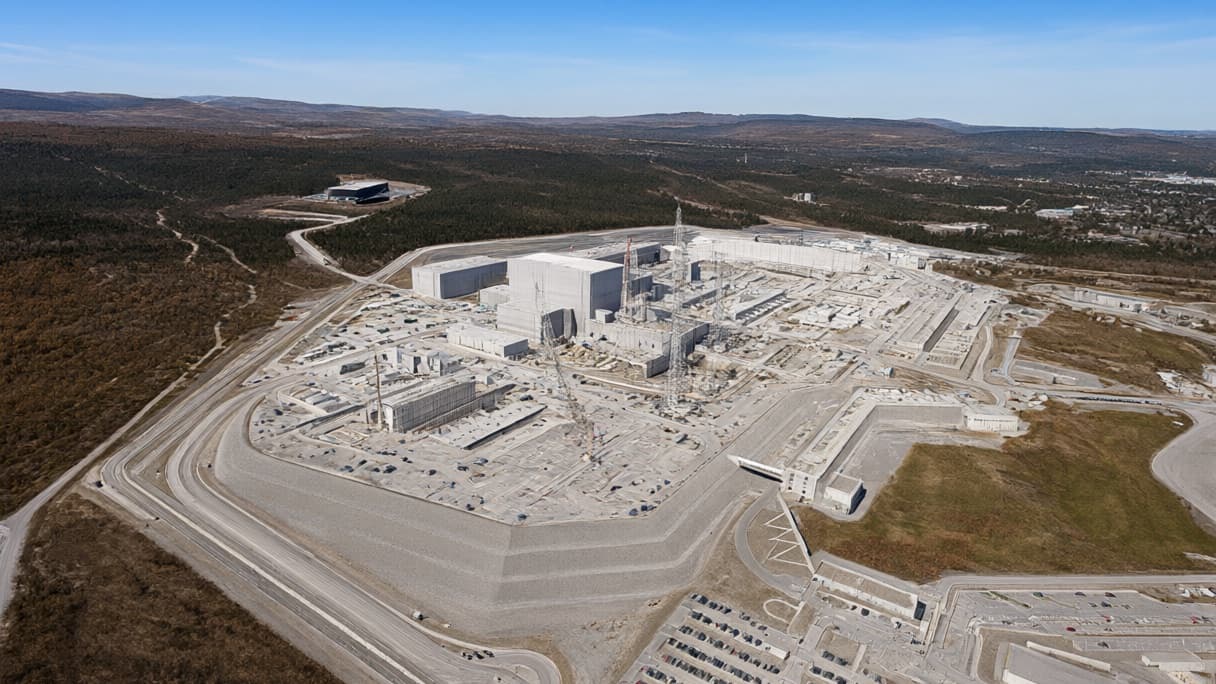
AI-generated image · US National Wire
An autonomous AI agent's rapid discovery of critical flaws in EPICS software highlights a growing operational risk for R&D-heavy enterprises and scientific facilities.
For enterprise leaders overseeing R&D and industrial operations, the traditional security moat of 'obscurity' is evaporating. The speed at which AI can now identify critical vulnerabilities in legacy industrial software is creating a dangerous gap between discovery and remediation, posing a direct threat to operational continuity.
As first reported by The Register, an autonomous AI agent named Cipher recently identified four previously unknown security vulnerabilities in the Experimental Physics and Industrial Control System (EPICS) open-source toolkit. The discovery process—which included investigating the unfamiliar system and validating the exploits—was completed in just three hours and 49 minutes. Shubham Raj, co-founder of Causal Security, told The Register that the initial investigation required no human intervention, followed by a single instruction to authorize deeper testing in a secure environment.
Developed decades ago, EPICS is a toolkit used for the remote control and construction of distributed Supervisory Control and Data Acquisition (SCADA) systems. It is utilized in approximately 90 major industrial, university, and scientific projects globally, including ITER's fusion reactor control system and Argonne National Laboratory's Advanced Photon Source. The software was originally developed by Argonne National Laboratory and Los Alamos National Laboratory.
The vulnerabilities discovered by Cipher include:
* **CVE-2026-114595:** A critical integer overflow vulnerability (CVSS v3.1 rating of 9.8) enabling remote attackers to execute code through an out-of-bounds heap write controlled by the attacker. * **CVE-2026-114596:** A high-severity improper message-length validation flaw (rated 8.2) that can cause a controller-process crash and out-of-bounds memory write. * **CVE-2026-114597:** A high-severity insufficient bounds checking bug (rated 7.5) that can result in process crashes and out-of-bounds memory reads. * **CVE-2026-114598:** A high-severity type confusion flaw (rated 7.5) that could expose adjacent memory contents and lead to a denial of service.
From an ROI and operational risk perspective, the implications are severe. Raj explained to The Register that because EPICS controllers sit between operators and physical equipment, an attacker could crash a controller during an expensive experiment, leading to lost work, significant downtime, and costly recovery. Furthermore, a remote code execution (RCE) exploit could allow an attacker to manipulate readings or interfere with control functions.
While exploiting these flaws requires access to a facility's control network—which could happen via misconfigured or insufficiently segmented networks—Raj noted that attackers no longer need years of specialized operational technology (OT) expertise to discover these weaknesses.
This incident follows a previous effort by Cipher that identified critical attack paths in North American and European power-grid systems, which led to a CISA security advisory on October 8. In response to the EPICS vulnerabilities, the US Cybersecurity and Infrastructure Security Agency (CISA) issued a Tuesday advisory warning that exploitation could lead to memory corruption, sensitive information disclosure, or arbitrary code execution. Organizations are urged to update to EPICS version 7.0.11 to mitigate these risks.